Indications
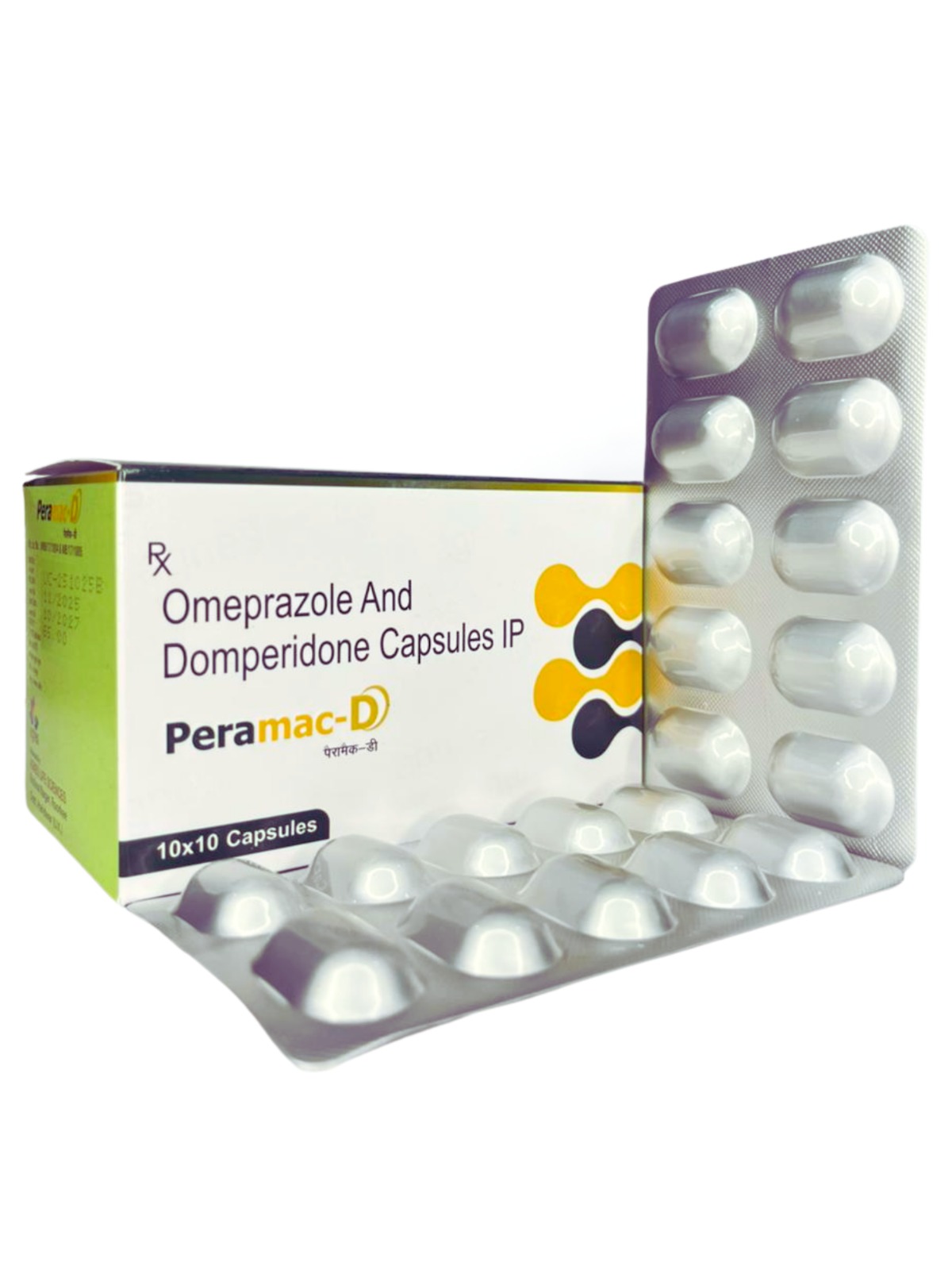
PERAMAC-D is clinically indicated for the management of various upper gastrointestinal and acid-related conditions:
Gastroesophageal Reflux Disease (GERD): Indicated for patients suffering from persistent acid backflow that causes discomfort, heartburn, or injury to the food pipe.
Peptic and Duodenal Ulcers: Used to promote the healing of sores in the lining of the stomach and the first part of the small intestine by reducing corrosive acid exposure.
Acid Peptic Disorders: Management of chronic conditions characterized by excessive acid production and upper abdominal pain or burning sensations.
Zollinger-Ellison Syndrome: Treatment of pathological hypersecretory conditions where the stomach produces extreme amounts of acid.
Erosive Esophagitis: Indicated for healing the inflammation and erosion of the esophageal tissue caused by chronic exposure to stomach acid.
Functional Dyspepsia: Relief from persistent or recurrent indigestion and stomach “heaviness” that has no obvious structural cause.
Gastropathy induced by NSAIDs: Preventive care for patients on long-term pain medication who are prone to stomach irritation and potential ulceration.
Gastroesophageal Reflux Disease (GERD): Indicated for patients suffering from persistent acid backflow that causes discomfort, heartburn, or injury to the food pipe.
Peptic and Duodenal Ulcers: Used to promote the healing of sores in the lining of the stomach and the first part of the small intestine by reducing corrosive acid exposure.
Acid Peptic Disorders: Management of chronic conditions characterized by excessive acid production and upper abdominal pain or burning sensations.
Zollinger-Ellison Syndrome: Treatment of pathological hypersecretory conditions where the stomach produces extreme amounts of acid.
Erosive Esophagitis: Indicated for healing the inflammation and erosion of the esophageal tissue caused by chronic exposure to stomach acid.
Functional Dyspepsia: Relief from persistent or recurrent indigestion and stomach “heaviness” that has no obvious structural cause.
Gastropathy induced by NSAIDs: Preventive care for patients on long-term pain medication who are prone to stomach irritation and potential ulceration.
Uses
The clinical utility of PERAMAC-D centers on its ability to synchronize the digestive system while neutralizing chemical triggers of pain:
Treats Acid Reflux and GERD: Omeprazole works by irreversibly inhibiting the proton pumps in the stomach lining, providing a profound reduction in acid secretion for up to 24 hours.
Reduces Heartburn and Bloating: Domperidone acts on the upper digestive tract to increase the movements of the stomach and intestines, allowing trapped gas and acid to move downward rather than upward.
Improves Gastric Motility: As a prokinetic agent, it enhances the tone of the lower esophageal sphincter (LES), which acts as a physical barrier against acid reflux.
Helpful in Peptic Ulcers: By maintaining a higher gastric pH, it creates an environment where the stomach lining can regenerate and heal without being further eroded by acid.
Manages Nausea due to Delayed Gastric Emptying: It effectively treats slow stomach emptying, which is a primary cause of feeling sick, full, or nauseous shortly after eating.
Prevents Regurgitation: It ensures that stomach contents follow the natural downward path of digestion, significantly reducing “sour burps” and the bitter taste of bile in the throat.
Promotes Better Digestion and Appetite: By clearing the discomfort and ensuring proper movement of food, it helps restore the body’s natural hunger signals and digestive rhythm.
Treats Acid Reflux and GERD: Omeprazole works by irreversibly inhibiting the proton pumps in the stomach lining, providing a profound reduction in acid secretion for up to 24 hours.
Reduces Heartburn and Bloating: Domperidone acts on the upper digestive tract to increase the movements of the stomach and intestines, allowing trapped gas and acid to move downward rather than upward.
Improves Gastric Motility: As a prokinetic agent, it enhances the tone of the lower esophageal sphincter (LES), which acts as a physical barrier against acid reflux.
Helpful in Peptic Ulcers: By maintaining a higher gastric pH, it creates an environment where the stomach lining can regenerate and heal without being further eroded by acid.
Manages Nausea due to Delayed Gastric Emptying: It effectively treats slow stomach emptying, which is a primary cause of feeling sick, full, or nauseous shortly after eating.
Prevents Regurgitation: It ensures that stomach contents follow the natural downward path of digestion, significantly reducing “sour burps” and the bitter taste of bile in the throat.
Promotes Better Digestion and Appetite: By clearing the discomfort and ensuring proper movement of food, it helps restore the body’s natural hunger signals and digestive rhythm.
Dosage & Storage
To maintain the stability of the active ingredients and ensure therapeutic efficacy, follow these expert guidelines:
Adult Dosage: The standard recommendation is one capsule daily, typically taken in the morning. Your physician may adjust the frequency depending on the severity of the inflammatory condition.
Duration of Course: Antacid therapy often requires a full 4 to 8-week course to ensure complete mucosal healing. Do not stop the medication prematurely even if symptoms disappear.
Storage Temperature: Store PERAMAC-D in a cool, dry place, ideally below 25°C. Excessive heat can cause the capsule shells to become brittle or sticky.
Protection from Moisture: Keep the capsules in their original strip packaging. Omeprazole is hygroscopic (absorbs moisture), which can lead to degradation if left exposed to the air.
Shelf Life Integrity: Check the expiration date before use; expired PPIs may not provide sufficient acid suppression to protect the stomach lining.
Safety Protocol: Always store this medication in a secure cabinet, well out of the reach of children and domestic pets.
Adult Dosage: The standard recommendation is one capsule daily, typically taken in the morning. Your physician may adjust the frequency depending on the severity of the inflammatory condition.
Duration of Course: Antacid therapy often requires a full 4 to 8-week course to ensure complete mucosal healing. Do not stop the medication prematurely even if symptoms disappear.
Storage Temperature: Store PERAMAC-D in a cool, dry place, ideally below 25°C. Excessive heat can cause the capsule shells to become brittle or sticky.
Protection from Moisture: Keep the capsules in their original strip packaging. Omeprazole is hygroscopic (absorbs moisture), which can lead to degradation if left exposed to the air.
Shelf Life Integrity: Check the expiration date before use; expired PPIs may not provide sufficient acid suppression to protect the stomach lining.
Safety Protocol: Always store this medication in a secure cabinet, well out of the reach of children and domestic pets.
Directions For Use
The timing of administration is critical for the “Proton Pump” mechanism to work effectively:
The 30-Minute Rule: PERAMAC-D must be taken 30 to 60 minutes before a meal (preferably breakfast). Omeprazole requires the proton pumps to be in an “active” state, which happens during the anticipation of food.
Swallow Whole: The capsule should be swallowed whole with a full glass of water.
Maintain Capsule Integrity: Do not chew, crush, or break the capsule. The medicine is contained in enteric-coated pellets designed to bypass the stomach acid and dissolve in the intestines. Breaking them will render the drug ineffective.
Avoid Habitual Triggers: For best results, avoid lying down immediately after taking the medication or eating, as this can physically encourage reflux.
Consistency: Take the medication at the same time every day to maintain a stable level of acid suppression in your system.
The 30-Minute Rule: PERAMAC-D must be taken 30 to 60 minutes before a meal (preferably breakfast). Omeprazole requires the proton pumps to be in an “active” state, which happens during the anticipation of food.
Swallow Whole: The capsule should be swallowed whole with a full glass of water.
Maintain Capsule Integrity: Do not chew, crush, or break the capsule. The medicine is contained in enteric-coated pellets designed to bypass the stomach acid and dissolve in the intestines. Breaking them will render the drug ineffective.
Avoid Habitual Triggers: For best results, avoid lying down immediately after taking the medication or eating, as this can physically encourage reflux.
Consistency: Take the medication at the same time every day to maintain a stable level of acid suppression in your system.
Precautions
Before starting PERAMAC-D, patients should be aware of the following medical considerations:
Long-Term Use: Chronic use of PPIs (over 1 year) may interfere with the absorption of Vitamin B12, Magnesium, and Calcium. Periodic monitoring by a healthcare professional is advised.
Bone Density: Patients with or at risk for osteoporosis should use this medication with caution, as long-term acid suppression is associated with a slightly higher risk of bone fractures.
Liver Function: If you have severe liver impairment, inform your doctor, as the metabolism of Omeprazole may be slowed, requiring a dose adjustment.
Cardiac Precautions: Domperidone should be used with caution in patients with a history of heart rhythm issues.
Infection Risk: Reducing stomach acid can slightly increase the risk of certain gastrointestinal infections, such as C. difficile. Contact your doctor if you develop severe, watery diarrhea.
Alcohol Interaction: Avoid alcohol during treatment, as it acts as a direct irritant to the stomach lining and increases acid production, counteracting the benefits of the medication.
Long-Term Use: Chronic use of PPIs (over 1 year) may interfere with the absorption of Vitamin B12, Magnesium, and Calcium. Periodic monitoring by a healthcare professional is advised.
Bone Density: Patients with or at risk for osteoporosis should use this medication with caution, as long-term acid suppression is associated with a slightly higher risk of bone fractures.
Liver Function: If you have severe liver impairment, inform your doctor, as the metabolism of Omeprazole may be slowed, requiring a dose adjustment.
Cardiac Precautions: Domperidone should be used with caution in patients with a history of heart rhythm issues.
Infection Risk: Reducing stomach acid can slightly increase the risk of certain gastrointestinal infections, such as C. difficile. Contact your doctor if you develop severe, watery diarrhea.
Alcohol Interaction: Avoid alcohol during treatment, as it acts as a direct irritant to the stomach lining and increases acid production, counteracting the benefits of the medication.
Side Effects
Flatulence
Dry mouth
Abdominal discomfort
Dizziness
Diarrhea
Dry mouth
Abdominal discomfort
Dizziness
Diarrhea
Medical Disclaimer
The information provided is for educational and informational purposes only and is not intended as medical advice. Always consult a healthcare professional for medical advice, diagnosis, or treatment. Agnes Life Sciences does not claim that any of its products can diagnose, treat, cure, or prevent any disease. This medication is a prescription-only product and should only be used under the direct supervision of a licensed physician.
Indications
PERAMAC-D is clinically indicated for the management of various upper gastrointestinal and acid-related conditions:
Gastroesophageal Reflux Disease (GERD): Indicated for patients suffering from persistent acid backflow that causes discomfort, heartburn, or injury to the food pipe.
Peptic and Duodenal Ulcers: Used to promote the healing of sores in the lining of the stomach and the first part of the small intestine by reducing corrosive acid exposure.
Acid Peptic Disorders: Management of chronic conditions characterized by excessive acid production and upper abdominal pain or burning sensations.
Zollinger-Ellison Syndrome: Treatment of pathological hypersecretory conditions where the stomach produces extreme amounts of acid.
Erosive Esophagitis: Indicated for healing the inflammation and erosion of the esophageal tissue caused by chronic exposure to stomach acid.
Functional Dyspepsia: Relief from persistent or recurrent indigestion and stomach “heaviness” that has no obvious structural cause.
Gastropathy induced by NSAIDs: Preventive care for patients on long-term pain medication who are prone to stomach irritation and potential ulceration.
Gastroesophageal Reflux Disease (GERD): Indicated for patients suffering from persistent acid backflow that causes discomfort, heartburn, or injury to the food pipe.
Peptic and Duodenal Ulcers: Used to promote the healing of sores in the lining of the stomach and the first part of the small intestine by reducing corrosive acid exposure.
Acid Peptic Disorders: Management of chronic conditions characterized by excessive acid production and upper abdominal pain or burning sensations.
Zollinger-Ellison Syndrome: Treatment of pathological hypersecretory conditions where the stomach produces extreme amounts of acid.
Erosive Esophagitis: Indicated for healing the inflammation and erosion of the esophageal tissue caused by chronic exposure to stomach acid.
Functional Dyspepsia: Relief from persistent or recurrent indigestion and stomach “heaviness” that has no obvious structural cause.
Gastropathy induced by NSAIDs: Preventive care for patients on long-term pain medication who are prone to stomach irritation and potential ulceration.
Uses
The clinical utility of PERAMAC-D centers on its ability to synchronize the digestive system while neutralizing chemical triggers of pain:
Treats Acid Reflux and GERD: Omeprazole works by irreversibly inhibiting the proton pumps in the stomach lining, providing a profound reduction in acid secretion for up to 24 hours.
Reduces Heartburn and Bloating: Domperidone acts on the upper digestive tract to increase the movements of the stomach and intestines, allowing trapped gas and acid to move downward rather than upward.
Improves Gastric Motility: As a prokinetic agent, it enhances the tone of the lower esophageal sphincter (LES), which acts as a physical barrier against acid reflux.
Helpful in Peptic Ulcers: By maintaining a higher gastric pH, it creates an environment where the stomach lining can regenerate and heal without being further eroded by acid.
Manages Nausea due to Delayed Gastric Emptying: It effectively treats slow stomach emptying, which is a primary cause of feeling sick, full, or nauseous shortly after eating.
Prevents Regurgitation: It ensures that stomach contents follow the natural downward path of digestion, significantly reducing “sour burps” and the bitter taste of bile in the throat.
Promotes Better Digestion and Appetite: By clearing the discomfort and ensuring proper movement of food, it helps restore the body’s natural hunger signals and digestive rhythm.
Treats Acid Reflux and GERD: Omeprazole works by irreversibly inhibiting the proton pumps in the stomach lining, providing a profound reduction in acid secretion for up to 24 hours.
Reduces Heartburn and Bloating: Domperidone acts on the upper digestive tract to increase the movements of the stomach and intestines, allowing trapped gas and acid to move downward rather than upward.
Improves Gastric Motility: As a prokinetic agent, it enhances the tone of the lower esophageal sphincter (LES), which acts as a physical barrier against acid reflux.
Helpful in Peptic Ulcers: By maintaining a higher gastric pH, it creates an environment where the stomach lining can regenerate and heal without being further eroded by acid.
Manages Nausea due to Delayed Gastric Emptying: It effectively treats slow stomach emptying, which is a primary cause of feeling sick, full, or nauseous shortly after eating.
Prevents Regurgitation: It ensures that stomach contents follow the natural downward path of digestion, significantly reducing “sour burps” and the bitter taste of bile in the throat.
Promotes Better Digestion and Appetite: By clearing the discomfort and ensuring proper movement of food, it helps restore the body’s natural hunger signals and digestive rhythm.
Dosage & Storage
To maintain the stability of the active ingredients and ensure therapeutic efficacy, follow these expert guidelines:
Adult Dosage: The standard recommendation is one capsule daily, typically taken in the morning. Your physician may adjust the frequency depending on the severity of the inflammatory condition.
Duration of Course: Antacid therapy often requires a full 4 to 8-week course to ensure complete mucosal healing. Do not stop the medication prematurely even if symptoms disappear.
Storage Temperature: Store PERAMAC-D in a cool, dry place, ideally below 25°C. Excessive heat can cause the capsule shells to become brittle or sticky.
Protection from Moisture: Keep the capsules in their original strip packaging. Omeprazole is hygroscopic (absorbs moisture), which can lead to degradation if left exposed to the air.
Shelf Life Integrity: Check the expiration date before use; expired PPIs may not provide sufficient acid suppression to protect the stomach lining.
Safety Protocol: Always store this medication in a secure cabinet, well out of the reach of children and domestic pets.
Adult Dosage: The standard recommendation is one capsule daily, typically taken in the morning. Your physician may adjust the frequency depending on the severity of the inflammatory condition.
Duration of Course: Antacid therapy often requires a full 4 to 8-week course to ensure complete mucosal healing. Do not stop the medication prematurely even if symptoms disappear.
Storage Temperature: Store PERAMAC-D in a cool, dry place, ideally below 25°C. Excessive heat can cause the capsule shells to become brittle or sticky.
Protection from Moisture: Keep the capsules in their original strip packaging. Omeprazole is hygroscopic (absorbs moisture), which can lead to degradation if left exposed to the air.
Shelf Life Integrity: Check the expiration date before use; expired PPIs may not provide sufficient acid suppression to protect the stomach lining.
Safety Protocol: Always store this medication in a secure cabinet, well out of the reach of children and domestic pets.
Directions For Use
The timing of administration is critical for the “Proton Pump” mechanism to work effectively:
The 30-Minute Rule: PERAMAC-D must be taken 30 to 60 minutes before a meal (preferably breakfast). Omeprazole requires the proton pumps to be in an “active” state, which happens during the anticipation of food.
Swallow Whole: The capsule should be swallowed whole with a full glass of water.
Maintain Capsule Integrity: Do not chew, crush, or break the capsule. The medicine is contained in enteric-coated pellets designed to bypass the stomach acid and dissolve in the intestines. Breaking them will render the drug ineffective.
Avoid Habitual Triggers: For best results, avoid lying down immediately after taking the medication or eating, as this can physically encourage reflux.
Consistency: Take the medication at the same time every day to maintain a stable level of acid suppression in your system.
The 30-Minute Rule: PERAMAC-D must be taken 30 to 60 minutes before a meal (preferably breakfast). Omeprazole requires the proton pumps to be in an “active” state, which happens during the anticipation of food.
Swallow Whole: The capsule should be swallowed whole with a full glass of water.
Maintain Capsule Integrity: Do not chew, crush, or break the capsule. The medicine is contained in enteric-coated pellets designed to bypass the stomach acid and dissolve in the intestines. Breaking them will render the drug ineffective.
Avoid Habitual Triggers: For best results, avoid lying down immediately after taking the medication or eating, as this can physically encourage reflux.
Consistency: Take the medication at the same time every day to maintain a stable level of acid suppression in your system.
Precautions
Before starting PERAMAC-D, patients should be aware of the following medical considerations:
Long-Term Use: Chronic use of PPIs (over 1 year) may interfere with the absorption of Vitamin B12, Magnesium, and Calcium. Periodic monitoring by a healthcare professional is advised.
Bone Density: Patients with or at risk for osteoporosis should use this medication with caution, as long-term acid suppression is associated with a slightly higher risk of bone fractures.
Liver Function: If you have severe liver impairment, inform your doctor, as the metabolism of Omeprazole may be slowed, requiring a dose adjustment.
Cardiac Precautions: Domperidone should be used with caution in patients with a history of heart rhythm issues.
Infection Risk: Reducing stomach acid can slightly increase the risk of certain gastrointestinal infections, such as C. difficile. Contact your doctor if you develop severe, watery diarrhea.
Alcohol Interaction: Avoid alcohol during treatment, as it acts as a direct irritant to the stomach lining and increases acid production, counteracting the benefits of the medication.
Long-Term Use: Chronic use of PPIs (over 1 year) may interfere with the absorption of Vitamin B12, Magnesium, and Calcium. Periodic monitoring by a healthcare professional is advised.
Bone Density: Patients with or at risk for osteoporosis should use this medication with caution, as long-term acid suppression is associated with a slightly higher risk of bone fractures.
Liver Function: If you have severe liver impairment, inform your doctor, as the metabolism of Omeprazole may be slowed, requiring a dose adjustment.
Cardiac Precautions: Domperidone should be used with caution in patients with a history of heart rhythm issues.
Infection Risk: Reducing stomach acid can slightly increase the risk of certain gastrointestinal infections, such as C. difficile. Contact your doctor if you develop severe, watery diarrhea.
Alcohol Interaction: Avoid alcohol during treatment, as it acts as a direct irritant to the stomach lining and increases acid production, counteracting the benefits of the medication.
Side Effects
Flatulence
Dry mouth
Abdominal discomfort
Dizziness
Diarrhea
Dry mouth
Abdominal discomfort
Dizziness
Diarrhea
Medical Disclaimer
The information provided is for educational and informational purposes only and is not intended as medical advice. Always consult a healthcare professional for medical advice, diagnosis, or treatment. Agnes Life Sciences does not claim that any of its products can diagnose, treat, cure, or prevent any disease. This medication is a prescription-only product and should only be used under the direct supervision of a licensed physician.