

Indications
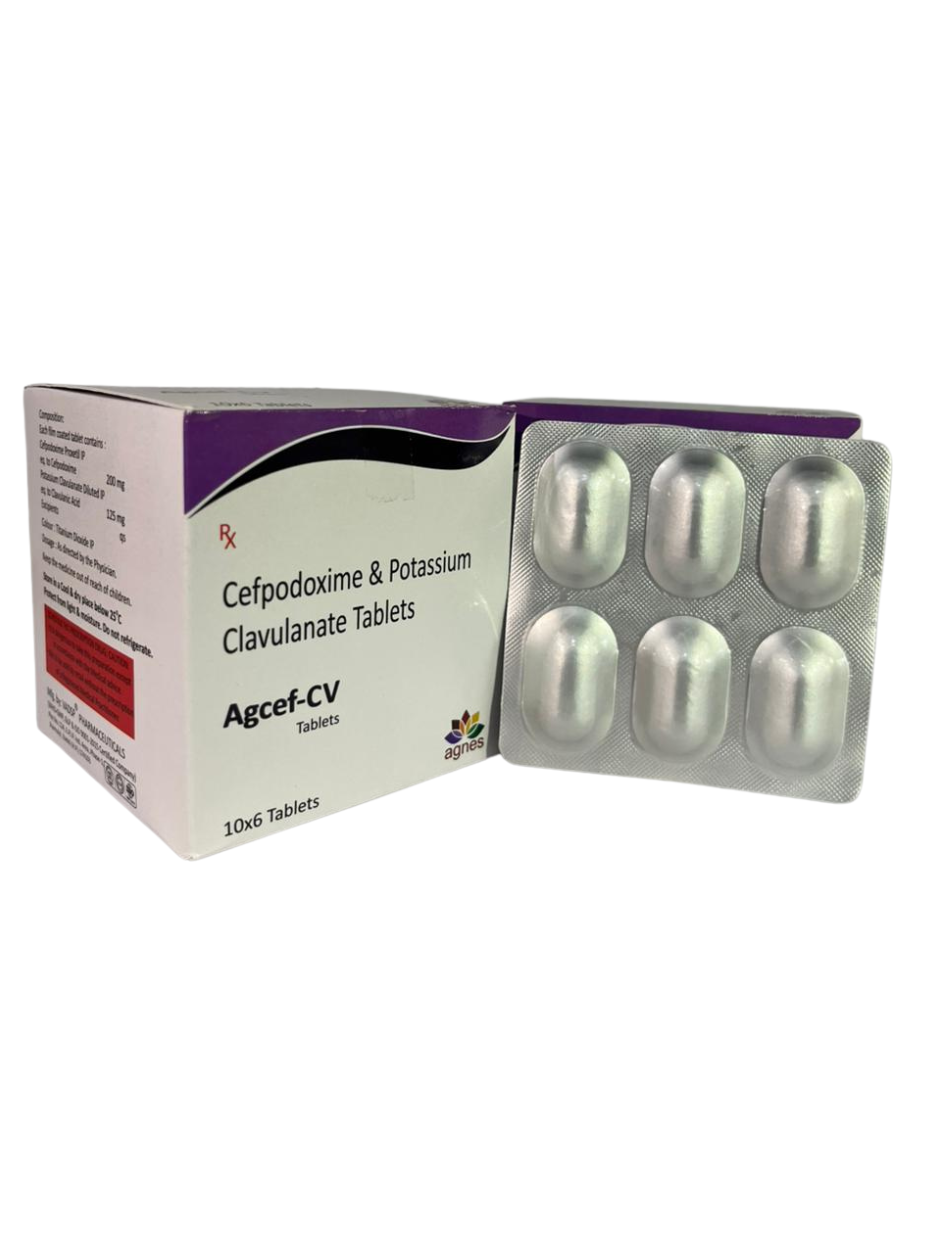
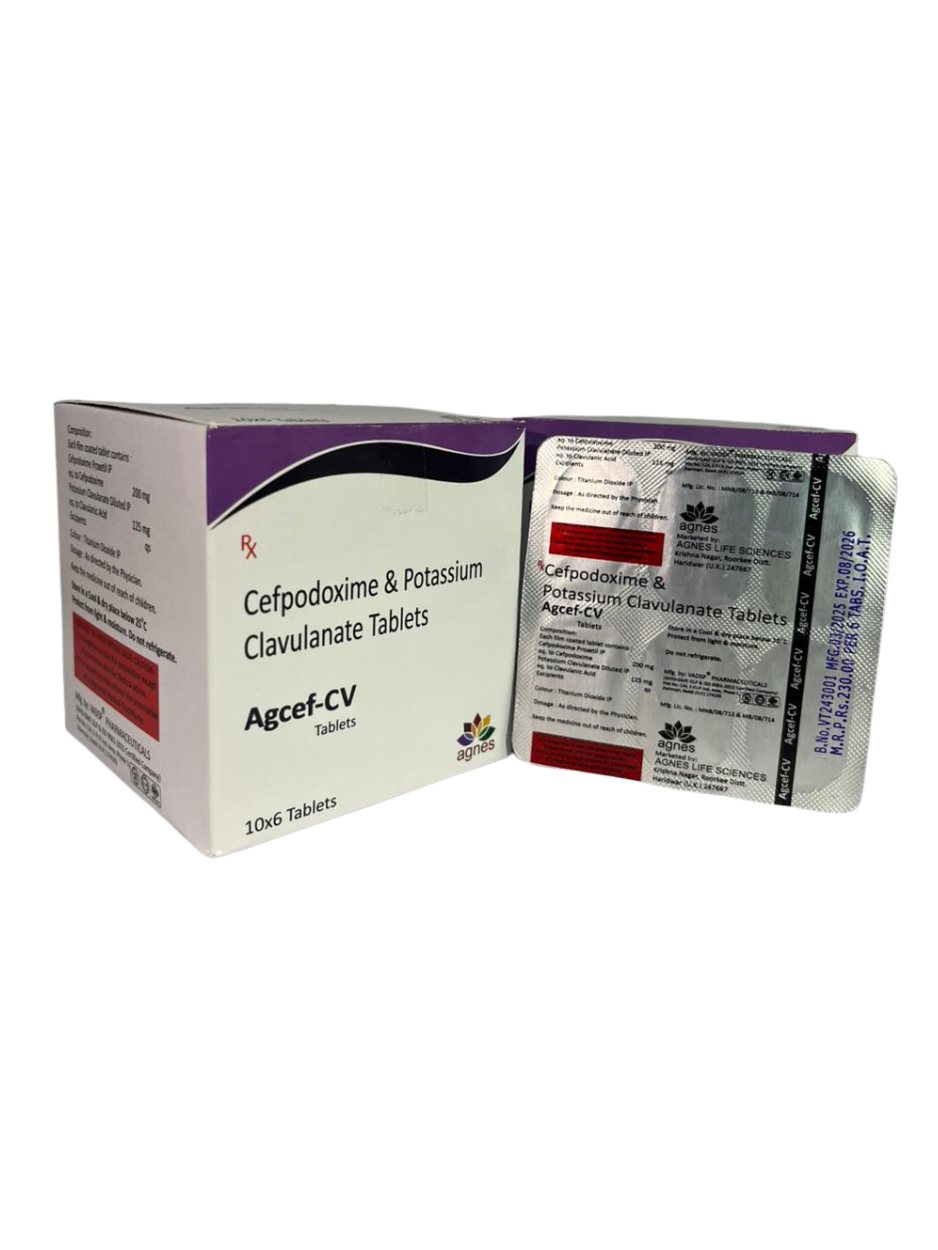
AGCEF-CV is indicated for the treatment of mild to moderate infections caused by susceptible strains of microorganisms. It is primarily used when a patient suffers from infections that have become resistant to Cefpodoxime alone.
Common indications include: Respiratory Tract Infections: Including acute bacterial sinusitis and community-acquired pneumonia.
Urinary Tract Infections (UTI): Effective against uncomplicated infections of the bladder and kidneys.
Skin and Soft Tissue Infections: Such as abscesses or infected wounds.
Ear, Nose, and Throat Infections: Including otitis media (middle ear infection) and tonsillitis or pharyngitis.
Common indications include: Respiratory Tract Infections: Including acute bacterial sinusitis and community-acquired pneumonia.
Urinary Tract Infections (UTI): Effective against uncomplicated infections of the bladder and kidneys.
Skin and Soft Tissue Infections: Such as abscesses or infected wounds.
Ear, Nose, and Throat Infections: Including otitis media (middle ear infection) and tonsillitis or pharyngitis.
Uses
The primary use of AGCEF-CV is to eliminate bacteria that cause infections in different parts of the body. Because it is a “broad-spectrum” antibiotic, it can target many different types of bacteria at once.
It is frequently used for:
Lower Respiratory Infections: Specifically for exacerbations of chronic bronchitis.
Sexually Transmitted Diseases: It can be used to treat uncomplicated gonorrhea.
Switch Therapy: Often used as a follow-up oral treatment after a patient has received intravenous (IV) antibiotics in a hospital setting.
It is frequently used for:
Lower Respiratory Infections: Specifically for exacerbations of chronic bronchitis.
Sexually Transmitted Diseases: It can be used to treat uncomplicated gonorrhea.
Switch Therapy: Often used as a follow-up oral treatment after a patient has received intravenous (IV) antibiotics in a hospital setting.
Dosage & Storage
The dosage of AGCEF-CV must be determined by a healthcare professional based on the severity of the infection, the patient’s age, and their kidney function.
The standard adult dosage is typically one tablet every 12 hours.
The medication should be taken with food to increase absorption and reduce the chance of an upset stomach.
Always complete the full course of the medication, even if you feel better after a few days.
Stopping too early can lead to the return of the infection and antibiotic resistance.
The standard adult dosage is typically one tablet every 12 hours.
The medication should be taken with food to increase absorption and reduce the chance of an upset stomach.
Always complete the full course of the medication, even if you feel better after a few days.
Stopping too early can lead to the return of the infection and antibiotic resistance.
Directions For Use
Swallow Whole: Take the tablet whole with a glass of water. Do not crush, chew, or break the tablet, as this can affect how the medicine is released into your system.
Timing: Try to take your doses at the same time every day to maintain a constant level of medicine in your bloodstream.
Missed Dose: If you miss a dose, take it as soon as you remember. If it is almost time for your next dose, skip the missed one. Do not take a double dose to make up for a forgotten one.
Timing: Try to take your doses at the same time every day to maintain a constant level of medicine in your bloodstream.
Missed Dose: If you miss a dose, take it as soon as you remember. If it is almost time for your next dose, skip the missed one. Do not take a double dose to make up for a forgotten one.
Precautions
Before taking AGCEF-CV, inform your doctor of the following:
Allergies: Tell your doctor if you are allergic to Cefpodoxime, Penicillins, or other Cephalosporins. Severe allergic reactions can occur.
Kidney Disease: Patients with kidney problems may need a modified dosage.
Pregnancy and Breastfeeding: Consult your doctor if you are pregnant, planning to become pregnant, or are currently breastfeeding.
Interactions: Inform your doctor about all other medicines you are taking, especially antacids or stomach acid reducers, as they can lower the effectiveness of this antibiotic.
Allergies: Tell your doctor if you are allergic to Cefpodoxime, Penicillins, or other Cephalosporins. Severe allergic reactions can occur.
Kidney Disease: Patients with kidney problems may need a modified dosage.
Pregnancy and Breastfeeding: Consult your doctor if you are pregnant, planning to become pregnant, or are currently breastfeeding.
Interactions: Inform your doctor about all other medicines you are taking, especially antacids or stomach acid reducers, as they can lower the effectiveness of this antibiotic.
Medical Disclaimer
The information provided here is for educational purposes only and should not be used as a substitute for professional medical advice, diagnosis, or treatment. AGCEF-CV is a prescription-only medication (Schedule H drug). Always seek the advice of your physician or other qualified health providers with any questions you may have regarding a medical condition. Never disregard professional medical advice or delay in seeking it because of something you have read on this website.
Indications
AGCEF-CV is indicated for the treatment of mild to moderate infections caused by susceptible strains of microorganisms. It is primarily used when a patient suffers from infections that have become resistant to Cefpodoxime alone.
Common indications include: Respiratory Tract Infections: Including acute bacterial sinusitis and community-acquired pneumonia.
Urinary Tract Infections (UTI): Effective against uncomplicated infections of the bladder and kidneys.
Skin and Soft Tissue Infections: Such as abscesses or infected wounds.
Ear, Nose, and Throat Infections: Including otitis media (middle ear infection) and tonsillitis or pharyngitis.
Common indications include: Respiratory Tract Infections: Including acute bacterial sinusitis and community-acquired pneumonia.
Urinary Tract Infections (UTI): Effective against uncomplicated infections of the bladder and kidneys.
Skin and Soft Tissue Infections: Such as abscesses or infected wounds.
Ear, Nose, and Throat Infections: Including otitis media (middle ear infection) and tonsillitis or pharyngitis.
Uses
The primary use of AGCEF-CV is to eliminate bacteria that cause infections in different parts of the body. Because it is a “broad-spectrum” antibiotic, it can target many different types of bacteria at once.
It is frequently used for:
Lower Respiratory Infections: Specifically for exacerbations of chronic bronchitis.
Sexually Transmitted Diseases: It can be used to treat uncomplicated gonorrhea.
Switch Therapy: Often used as a follow-up oral treatment after a patient has received intravenous (IV) antibiotics in a hospital setting.
It is frequently used for:
Lower Respiratory Infections: Specifically for exacerbations of chronic bronchitis.
Sexually Transmitted Diseases: It can be used to treat uncomplicated gonorrhea.
Switch Therapy: Often used as a follow-up oral treatment after a patient has received intravenous (IV) antibiotics in a hospital setting.
Dosage & Storage
The dosage of AGCEF-CV must be determined by a healthcare professional based on the severity of the infection, the patient’s age, and their kidney function.
The standard adult dosage is typically one tablet every 12 hours.
The medication should be taken with food to increase absorption and reduce the chance of an upset stomach.
Always complete the full course of the medication, even if you feel better after a few days.
Stopping too early can lead to the return of the infection and antibiotic resistance.
The standard adult dosage is typically one tablet every 12 hours.
The medication should be taken with food to increase absorption and reduce the chance of an upset stomach.
Always complete the full course of the medication, even if you feel better after a few days.
Stopping too early can lead to the return of the infection and antibiotic resistance.
Directions For Use
Swallow Whole: Take the tablet whole with a glass of water. Do not crush, chew, or break the tablet, as this can affect how the medicine is released into your system.
Timing: Try to take your doses at the same time every day to maintain a constant level of medicine in your bloodstream.
Missed Dose: If you miss a dose, take it as soon as you remember. If it is almost time for your next dose, skip the missed one. Do not take a double dose to make up for a forgotten one.
Timing: Try to take your doses at the same time every day to maintain a constant level of medicine in your bloodstream.
Missed Dose: If you miss a dose, take it as soon as you remember. If it is almost time for your next dose, skip the missed one. Do not take a double dose to make up for a forgotten one.
Precautions
Before taking AGCEF-CV, inform your doctor of the following:
Allergies: Tell your doctor if you are allergic to Cefpodoxime, Penicillins, or other Cephalosporins. Severe allergic reactions can occur.
Kidney Disease: Patients with kidney problems may need a modified dosage.
Pregnancy and Breastfeeding: Consult your doctor if you are pregnant, planning to become pregnant, or are currently breastfeeding.
Interactions: Inform your doctor about all other medicines you are taking, especially antacids or stomach acid reducers, as they can lower the effectiveness of this antibiotic.
Allergies: Tell your doctor if you are allergic to Cefpodoxime, Penicillins, or other Cephalosporins. Severe allergic reactions can occur.
Kidney Disease: Patients with kidney problems may need a modified dosage.
Pregnancy and Breastfeeding: Consult your doctor if you are pregnant, planning to become pregnant, or are currently breastfeeding.
Interactions: Inform your doctor about all other medicines you are taking, especially antacids or stomach acid reducers, as they can lower the effectiveness of this antibiotic.
Side Effects
Medical Disclaimer
The information provided here is for educational purposes only and should not be used as a substitute for professional medical advice, diagnosis, or treatment. AGCEF-CV is a prescription-only medication (Schedule H drug). Always seek the advice of your physician or other qualified health providers with any questions you may have regarding a medical condition. Never disregard professional medical advice or delay in seeking it because of something you have read on this website.