Indications
AGFER is an iron injection given directly into the vein. It’s used when the body is low on iron and tablets either haven’t worked, aren’t being absorbed properly, or are causing too many side effects to continue.
Iron Deficiency Anaemia: When iron levels have dropped too low and oral supplements haven’t been enough — or aren’t suitable for the patient at all.
Anaemia in Chronic Kidney Disease (CKD): Patients on dialysis or with kidney problems often can’t absorb iron properly from tablets. The gut just doesn’t do the job in these cases. IV iron goes straight into the bloodstream and gets around that problem entirely.
Anaemia During Pregnancy: When a pregnant woman’s haemoglobin is low and oral iron isn’t correcting it fast enough, this injection gives the body what it needs more quickly.
Post-Operative Anaemia: After surgeries involving significant blood loss, iron stores drop. This helps rebuild them faster than tablets ever could.
Inflammatory Bowel Disease (IBD): Crohn’s disease, ulcerative colitis — gut inflammation in these conditions blocks iron absorption from tablets. IV iron is often the only practical option here.
Cancer-Related Anaemia: Cancer patients, especially those on chemotherapy, often become anaemic. This injection helps maintain iron levels during treatment.
Intolerance to Oral Iron: Severe constipation, stomach cramps, nausea from iron tablets — when the side effects make it impossible to continue with oral iron, this is the alternative.
Rapid Iron Replenishment: Before surgery, during active treatment, or whenever iron levels need to be corrected quickly — this does it faster than any tablet can.
Iron Deficiency Anaemia: When iron levels have dropped too low and oral supplements haven’t been enough — or aren’t suitable for the patient at all.
Anaemia in Chronic Kidney Disease (CKD): Patients on dialysis or with kidney problems often can’t absorb iron properly from tablets. The gut just doesn’t do the job in these cases. IV iron goes straight into the bloodstream and gets around that problem entirely.
Anaemia During Pregnancy: When a pregnant woman’s haemoglobin is low and oral iron isn’t correcting it fast enough, this injection gives the body what it needs more quickly.
Post-Operative Anaemia: After surgeries involving significant blood loss, iron stores drop. This helps rebuild them faster than tablets ever could.
Inflammatory Bowel Disease (IBD): Crohn’s disease, ulcerative colitis — gut inflammation in these conditions blocks iron absorption from tablets. IV iron is often the only practical option here.
Cancer-Related Anaemia: Cancer patients, especially those on chemotherapy, often become anaemic. This injection helps maintain iron levels during treatment.
Intolerance to Oral Iron: Severe constipation, stomach cramps, nausea from iron tablets — when the side effects make it impossible to continue with oral iron, this is the alternative.
Rapid Iron Replenishment: Before surgery, during active treatment, or whenever iron levels need to be corrected quickly — this does it faster than any tablet can.
Uses
AGFER contains Iron Sucrose — iron that’s been bound to a sugar molecule to make it safe for injection into a vein. Once it’s in the bloodstream, the iron gets released gradually and the body puts it to work making haemoglobin. Haemoglobin is what red blood cells use to carry oxygen around the body. When haemoglobin is low, everything suffers — energy, breathing, strength. Correcting iron levels fixes that from the root.
Treats Iron Deficiency Anaemia: Iron goes directly into the bloodstream — no gut absorption needed. Faster, more reliable, and more complete than oral iron in most cases.
Supports Red Blood Cell Production: Iron is what the bone marrow needs to produce healthy red blood cells. Give the body enough iron and it starts doing exactly that.
Improves Energy and Stamina: Most patients notice a real difference once haemoglobin starts coming up — less tiredness, easier breathing, more ability to get through the day normally.
Helps in CKD Patients: Dialysis patients lose iron regularly and can’t rely on tablets. This injection fills that gap effectively.
Safe Alternative to Oral Iron: No constipation, no dark stools, no stomach cramps. Everything that makes oral iron hard to stick with — this avoids completely.
Supports Recovery After Blood Loss: After surgery, childbirth, or any significant blood loss — this helps the body rebuild its iron stores faster.
Treats Iron Deficiency Anaemia: Iron goes directly into the bloodstream — no gut absorption needed. Faster, more reliable, and more complete than oral iron in most cases.
Supports Red Blood Cell Production: Iron is what the bone marrow needs to produce healthy red blood cells. Give the body enough iron and it starts doing exactly that.
Improves Energy and Stamina: Most patients notice a real difference once haemoglobin starts coming up — less tiredness, easier breathing, more ability to get through the day normally.
Helps in CKD Patients: Dialysis patients lose iron regularly and can’t rely on tablets. This injection fills that gap effectively.
Safe Alternative to Oral Iron: No constipation, no dark stools, no stomach cramps. Everything that makes oral iron hard to stick with — this avoids completely.
Supports Recovery After Blood Loss: After surgery, childbirth, or any significant blood loss — this helps the body rebuild its iron stores faster.
Dosage & Storage Title
Dosage: The doctor works this out individually — based on the patient’s body weight, current haemoglobin level, and how much it needs to be raised. No standard dose fits everyone.
Route of Administration: Slow intravenous injection or infusion only — given by a trained healthcare professional. Never given as an intramuscular injection. Never taken orally.
Rate of Administration: Must be given slowly. Giving it too fast can cause serious reactions. The rate matters as much as the dose.
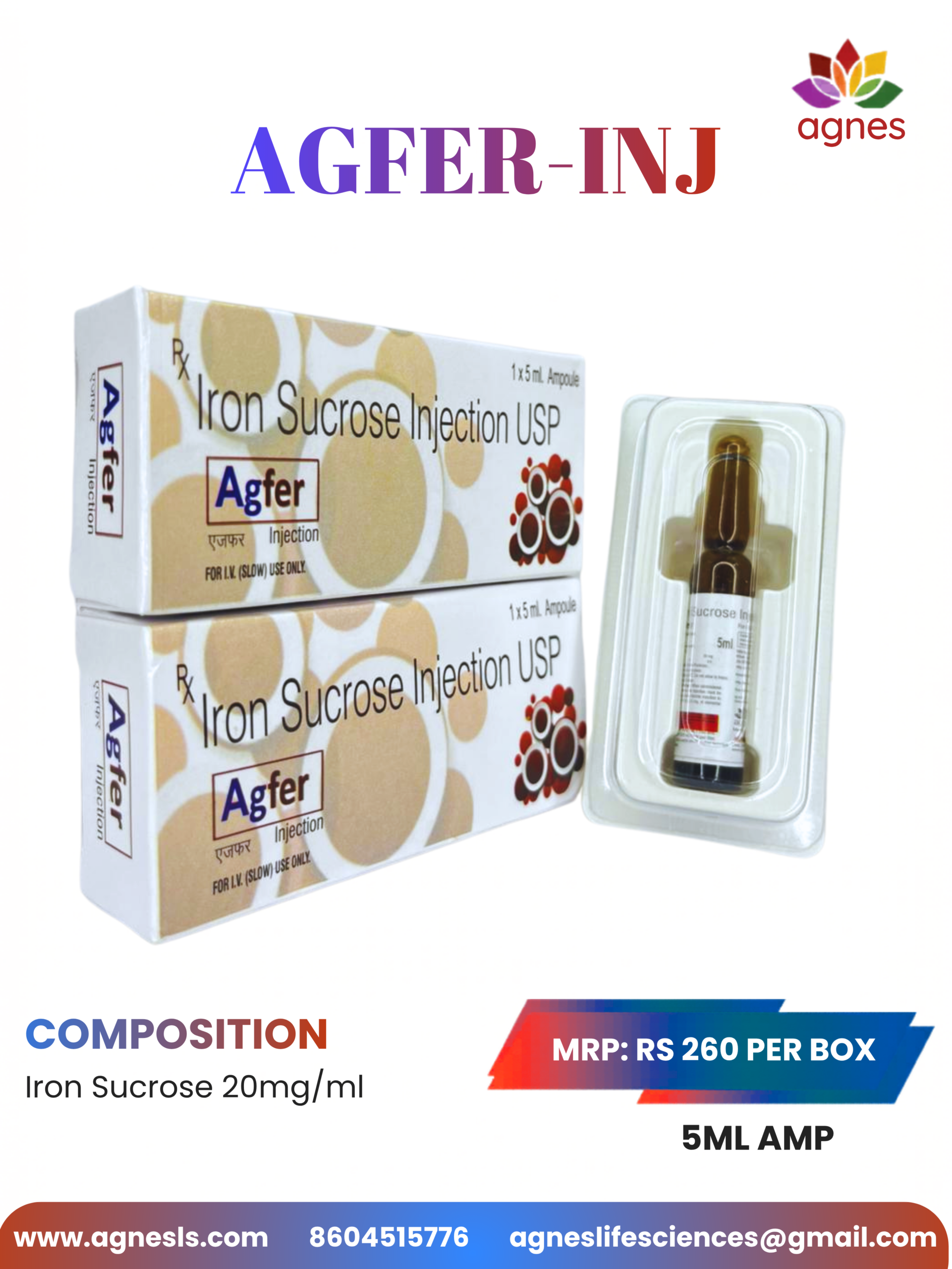
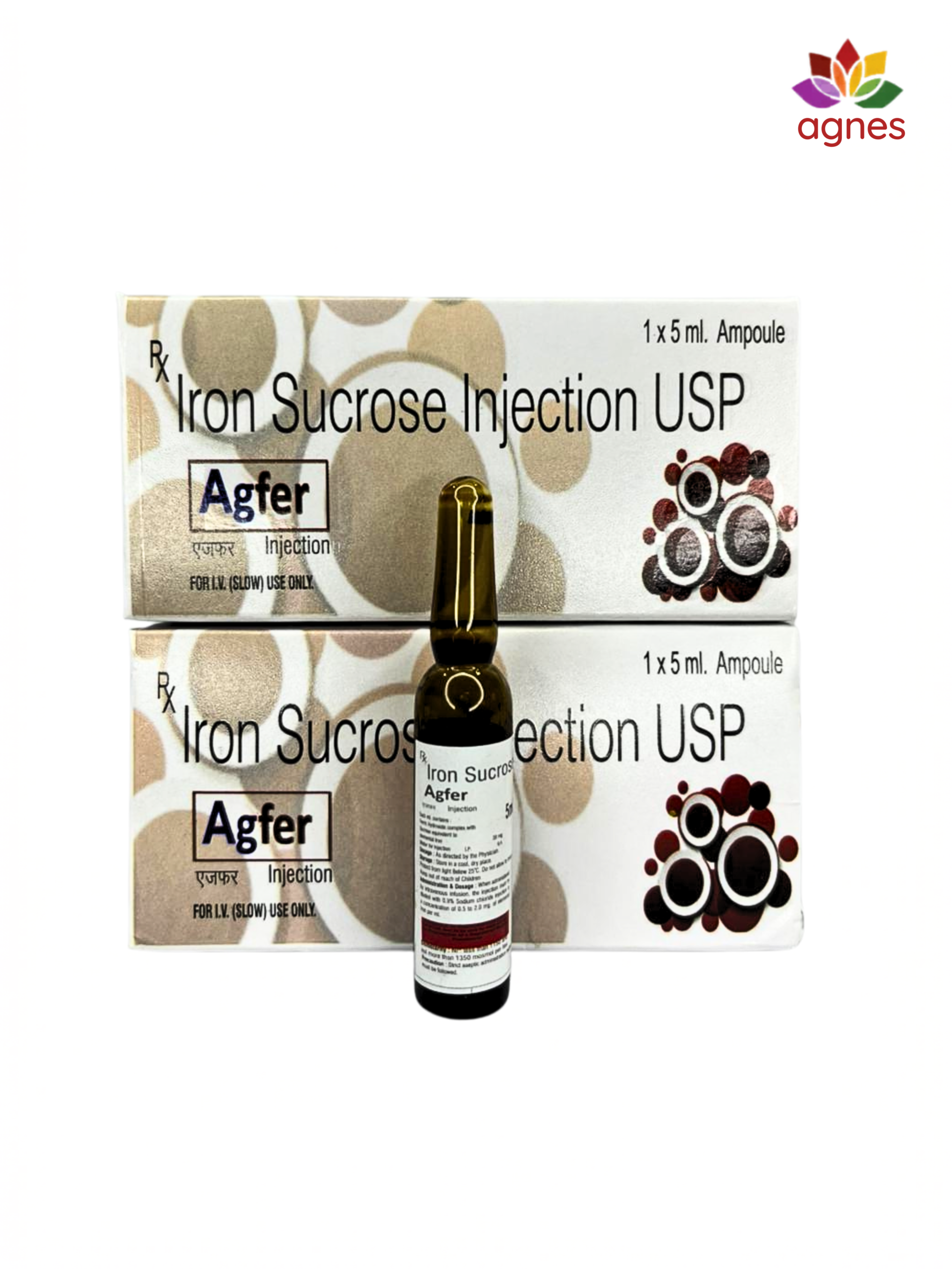
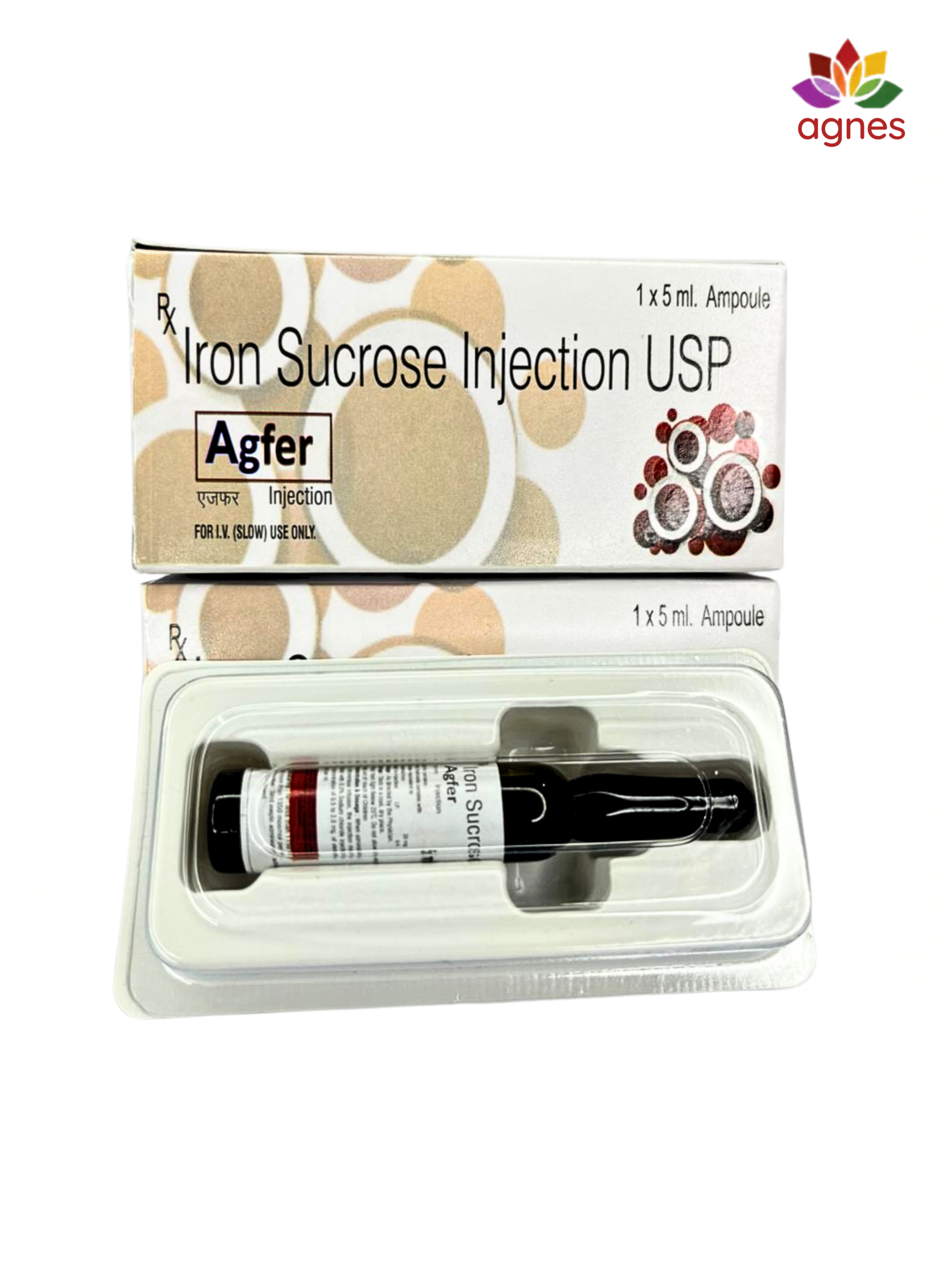
Packing: Comes as a 5ml ampoule with 100mg of elemental iron — that’s 20mg per ml.
Storage: Room temperature — 15°C to 30°C. Cool, dry place.
Light Protection: Keep in the original packaging, away from direct sunlight.
Do Not Freeze: Freezing damages the solution. Don’t use it if the colour looks off or particles are visible.
Single Use: Each ampoule is one use only. Anything left over after opening gets discarded.
Keep Out of Reach: Away from children and pets.
Route of Administration: Slow intravenous injection or infusion only — given by a trained healthcare professional. Never given as an intramuscular injection. Never taken orally.
Rate of Administration: Must be given slowly. Giving it too fast can cause serious reactions. The rate matters as much as the dose.
Packing: Comes as a 5ml ampoule with 100mg of elemental iron — that’s 20mg per ml.
Storage: Room temperature — 15°C to 30°C. Cool, dry place.
Light Protection: Keep in the original packaging, away from direct sunlight.
Do Not Freeze: Freezing damages the solution. Don’t use it if the colour looks off or particles are visible.
Single Use: Each ampoule is one use only. Anything left over after opening gets discarded.
Keep Out of Reach: Away from children and pets.
Directions For Use Title
Hospital or Clinic Use Only: AGFER is given in a hospital, clinic, or dialysis centre under medical supervision. Not for home use.
Do Not Self-Administer: Always prepared and given by a qualified doctor or nurse. Not something the patient does themselves.
Slow Administration: The injection goes in slowly — always. A rapid injection can cause a drop in blood pressure, dizziness, or a serious allergic reaction.
Test Dose: Some patients get a small test dose first before the full amount is given — just to check for any allergic response.
Inspect Before Use: The solution should look like a dark brown liquid — clear, no floating particles. If it looks cloudy or the colour has changed, don’t use it.
Monitoring During Administration: The patient should be watched during the injection and for at least 30 minutes after — in case of any allergic or adverse reaction.
Complete the Prescribed Course: Follow the full treatment plan the doctor has set out. Stopping early means iron levels may not be fully restored.
Do Not Self-Administer: Always prepared and given by a qualified doctor or nurse. Not something the patient does themselves.
Slow Administration: The injection goes in slowly — always. A rapid injection can cause a drop in blood pressure, dizziness, or a serious allergic reaction.
Test Dose: Some patients get a small test dose first before the full amount is given — just to check for any allergic response.
Inspect Before Use: The solution should look like a dark brown liquid — clear, no floating particles. If it looks cloudy or the colour has changed, don’t use it.
Monitoring During Administration: The patient should be watched during the injection and for at least 30 minutes after — in case of any allergic or adverse reaction.
Complete the Prescribed Course: Follow the full treatment plan the doctor has set out. Stopping early means iron levels may not be fully restored.
Precautions Title
Iron Overload: Don’t use this if the patient already has too much iron in their body — conditions like haemochromatosis. Adding more iron intravenously in those cases is dangerous.
Allergy to Iron Products: Had a reaction to iron sucrose or any other injectable iron before? Tell the doctor before starting.
Infections: Active bacterial infections and iron don’t mix well — bacteria actually use iron to grow. The doctor will decide the right time to begin treatment.
Liver Disease: Caution needed. Liver function tests may be checked before starting.
Heart Conditions: Patients with heart disease or low blood pressure need careful monitoring throughout administration.
Pregnancy & Breastfeeding: Used when clearly needed and prescribed by a doctor — especially cautious in the first trimester.
Oral Iron Interaction: Don’t take oral iron tablets while receiving these injections. The body can’t effectively use both at the same time.
Asthma or Immune Conditions: History of asthma, eczema, or other allergic conditions? Higher risk of reactions — closer monitoring applies.
Allergy to Iron Products: Had a reaction to iron sucrose or any other injectable iron before? Tell the doctor before starting.
Infections: Active bacterial infections and iron don’t mix well — bacteria actually use iron to grow. The doctor will decide the right time to begin treatment.
Liver Disease: Caution needed. Liver function tests may be checked before starting.
Heart Conditions: Patients with heart disease or low blood pressure need careful monitoring throughout administration.
Pregnancy & Breastfeeding: Used when clearly needed and prescribed by a doctor — especially cautious in the first trimester.
Oral Iron Interaction: Don’t take oral iron tablets while receiving these injections. The body can’t effectively use both at the same time.
Asthma or Immune Conditions: History of asthma, eczema, or other allergic conditions? Higher risk of reactions — closer monitoring applies.
Side Effects
Mild nausea
Skin rash
Headache
Gastric discomfort
Drowsiness (rare)
Skin rash
Headache
Gastric discomfort
Drowsiness (rare)
Medical Disclaimer
This page is here for general understanding only. It doesn’t replace your doctor’s advice and it was never meant to. AGFER is prescription-only and must be given under the supervision of a licensed medical professional.
Agnes Life Sciences does not claim this or any other product can diagnose, treat, cure, or prevent any disease. Your doctor is the right person for diagnosis and treatment — not this page.
Indications
AGFER is an iron injection given directly into the vein. It’s used when the body is low on iron and tablets either haven’t worked, aren’t being absorbed properly, or are causing too many side effects to continue.
Iron Deficiency Anaemia: When iron levels have dropped too low and oral supplements haven’t been enough — or aren’t suitable for the patient at all.
Anaemia in Chronic Kidney Disease (CKD): Patients on dialysis or with kidney problems often can’t absorb iron properly from tablets. The gut just doesn’t do the job in these cases. IV iron goes straight into the bloodstream and gets around that problem entirely.
Anaemia During Pregnancy: When a pregnant woman’s haemoglobin is low and oral iron isn’t correcting it fast enough, this injection gives the body what it needs more quickly.
Post-Operative Anaemia: After surgeries involving significant blood loss, iron stores drop. This helps rebuild them faster than tablets ever could.
Inflammatory Bowel Disease (IBD): Crohn’s disease, ulcerative colitis — gut inflammation in these conditions blocks iron absorption from tablets. IV iron is often the only practical option here.
Cancer-Related Anaemia: Cancer patients, especially those on chemotherapy, often become anaemic. This injection helps maintain iron levels during treatment.
Intolerance to Oral Iron: Severe constipation, stomach cramps, nausea from iron tablets — when the side effects make it impossible to continue with oral iron, this is the alternative.
Rapid Iron Replenishment: Before surgery, during active treatment, or whenever iron levels need to be corrected quickly — this does it faster than any tablet can.
Iron Deficiency Anaemia: When iron levels have dropped too low and oral supplements haven’t been enough — or aren’t suitable for the patient at all.
Anaemia in Chronic Kidney Disease (CKD): Patients on dialysis or with kidney problems often can’t absorb iron properly from tablets. The gut just doesn’t do the job in these cases. IV iron goes straight into the bloodstream and gets around that problem entirely.
Anaemia During Pregnancy: When a pregnant woman’s haemoglobin is low and oral iron isn’t correcting it fast enough, this injection gives the body what it needs more quickly.
Post-Operative Anaemia: After surgeries involving significant blood loss, iron stores drop. This helps rebuild them faster than tablets ever could.
Inflammatory Bowel Disease (IBD): Crohn’s disease, ulcerative colitis — gut inflammation in these conditions blocks iron absorption from tablets. IV iron is often the only practical option here.
Cancer-Related Anaemia: Cancer patients, especially those on chemotherapy, often become anaemic. This injection helps maintain iron levels during treatment.
Intolerance to Oral Iron: Severe constipation, stomach cramps, nausea from iron tablets — when the side effects make it impossible to continue with oral iron, this is the alternative.
Rapid Iron Replenishment: Before surgery, during active treatment, or whenever iron levels need to be corrected quickly — this does it faster than any tablet can.
Uses
AGFER contains Iron Sucrose — iron that’s been bound to a sugar molecule to make it safe for injection into a vein. Once it’s in the bloodstream, the iron gets released gradually and the body puts it to work making haemoglobin. Haemoglobin is what red blood cells use to carry oxygen around the body. When haemoglobin is low, everything suffers — energy, breathing, strength. Correcting iron levels fixes that from the root.
Treats Iron Deficiency Anaemia: Iron goes directly into the bloodstream — no gut absorption needed. Faster, more reliable, and more complete than oral iron in most cases.
Supports Red Blood Cell Production: Iron is what the bone marrow needs to produce healthy red blood cells. Give the body enough iron and it starts doing exactly that.
Improves Energy and Stamina: Most patients notice a real difference once haemoglobin starts coming up — less tiredness, easier breathing, more ability to get through the day normally.
Helps in CKD Patients: Dialysis patients lose iron regularly and can’t rely on tablets. This injection fills that gap effectively.
Safe Alternative to Oral Iron: No constipation, no dark stools, no stomach cramps. Everything that makes oral iron hard to stick with — this avoids completely.
Supports Recovery After Blood Loss: After surgery, childbirth, or any significant blood loss — this helps the body rebuild its iron stores faster.
Treats Iron Deficiency Anaemia: Iron goes directly into the bloodstream — no gut absorption needed. Faster, more reliable, and more complete than oral iron in most cases.
Supports Red Blood Cell Production: Iron is what the bone marrow needs to produce healthy red blood cells. Give the body enough iron and it starts doing exactly that.
Improves Energy and Stamina: Most patients notice a real difference once haemoglobin starts coming up — less tiredness, easier breathing, more ability to get through the day normally.
Helps in CKD Patients: Dialysis patients lose iron regularly and can’t rely on tablets. This injection fills that gap effectively.
Safe Alternative to Oral Iron: No constipation, no dark stools, no stomach cramps. Everything that makes oral iron hard to stick with — this avoids completely.
Supports Recovery After Blood Loss: After surgery, childbirth, or any significant blood loss — this helps the body rebuild its iron stores faster.
Dosage & Storage
Dosage: The doctor works this out individually — based on the patient’s body weight, current haemoglobin level, and how much it needs to be raised. No standard dose fits everyone.
Route of Administration: Slow intravenous injection or infusion only — given by a trained healthcare professional. Never given as an intramuscular injection. Never taken orally.
Rate of Administration: Must be given slowly. Giving it too fast can cause serious reactions. The rate matters as much as the dose.
Packing: Comes as a 5ml ampoule with 100mg of elemental iron — that’s 20mg per ml.
Storage: Room temperature — 15°C to 30°C. Cool, dry place.
Light Protection: Keep in the original packaging, away from direct sunlight.
Do Not Freeze: Freezing damages the solution. Don’t use it if the colour looks off or particles are visible.
Single Use: Each ampoule is one use only. Anything left over after opening gets discarded.
Keep Out of Reach: Away from children and pets.
Route of Administration: Slow intravenous injection or infusion only — given by a trained healthcare professional. Never given as an intramuscular injection. Never taken orally.
Rate of Administration: Must be given slowly. Giving it too fast can cause serious reactions. The rate matters as much as the dose.
Packing: Comes as a 5ml ampoule with 100mg of elemental iron — that’s 20mg per ml.
Storage: Room temperature — 15°C to 30°C. Cool, dry place.
Light Protection: Keep in the original packaging, away from direct sunlight.
Do Not Freeze: Freezing damages the solution. Don’t use it if the colour looks off or particles are visible.
Single Use: Each ampoule is one use only. Anything left over after opening gets discarded.
Keep Out of Reach: Away from children and pets.
Directions For Use
Hospital or Clinic Use Only: AGFER is given in a hospital, clinic, or dialysis centre under medical supervision. Not for home use.
Do Not Self-Administer: Always prepared and given by a qualified doctor or nurse. Not something the patient does themselves.
Slow Administration: The injection goes in slowly — always. A rapid injection can cause a drop in blood pressure, dizziness, or a serious allergic reaction.
Test Dose: Some patients get a small test dose first before the full amount is given — just to check for any allergic response.
Inspect Before Use: The solution should look like a dark brown liquid — clear, no floating particles. If it looks cloudy or the colour has changed, don’t use it.
Monitoring During Administration: The patient should be watched during the injection and for at least 30 minutes after — in case of any allergic or adverse reaction.
Complete the Prescribed Course: Follow the full treatment plan the doctor has set out. Stopping early means iron levels may not be fully restored.
Do Not Self-Administer: Always prepared and given by a qualified doctor or nurse. Not something the patient does themselves.
Slow Administration: The injection goes in slowly — always. A rapid injection can cause a drop in blood pressure, dizziness, or a serious allergic reaction.
Test Dose: Some patients get a small test dose first before the full amount is given — just to check for any allergic response.
Inspect Before Use: The solution should look like a dark brown liquid — clear, no floating particles. If it looks cloudy or the colour has changed, don’t use it.
Monitoring During Administration: The patient should be watched during the injection and for at least 30 minutes after — in case of any allergic or adverse reaction.
Complete the Prescribed Course: Follow the full treatment plan the doctor has set out. Stopping early means iron levels may not be fully restored.
Precautions
Iron Overload: Don’t use this if the patient already has too much iron in their body — conditions like haemochromatosis. Adding more iron intravenously in those cases is dangerous.
Allergy to Iron Products: Had a reaction to iron sucrose or any other injectable iron before? Tell the doctor before starting.
Infections: Active bacterial infections and iron don’t mix well — bacteria actually use iron to grow. The doctor will decide the right time to begin treatment.
Liver Disease: Caution needed. Liver function tests may be checked before starting.
Heart Conditions: Patients with heart disease or low blood pressure need careful monitoring throughout administration.
Pregnancy & Breastfeeding: Used when clearly needed and prescribed by a doctor — especially cautious in the first trimester.
Oral Iron Interaction: Don’t take oral iron tablets while receiving these injections. The body can’t effectively use both at the same time.
Asthma or Immune Conditions: History of asthma, eczema, or other allergic conditions? Higher risk of reactions — closer monitoring applies.
Allergy to Iron Products: Had a reaction to iron sucrose or any other injectable iron before? Tell the doctor before starting.
Infections: Active bacterial infections and iron don’t mix well — bacteria actually use iron to grow. The doctor will decide the right time to begin treatment.
Liver Disease: Caution needed. Liver function tests may be checked before starting.
Heart Conditions: Patients with heart disease or low blood pressure need careful monitoring throughout administration.
Pregnancy & Breastfeeding: Used when clearly needed and prescribed by a doctor — especially cautious in the first trimester.
Oral Iron Interaction: Don’t take oral iron tablets while receiving these injections. The body can’t effectively use both at the same time.
Asthma or Immune Conditions: History of asthma, eczema, or other allergic conditions? Higher risk of reactions — closer monitoring applies.
Side Effects
Mild nausea
Skin rash
Headache
Gastric discomfort
Drowsiness (rare)
Skin rash
Headache
Gastric discomfort
Drowsiness (rare)
Medical Disclaimer
This page is here for general understanding only. It doesn’t replace your doctor’s advice and it was never meant to. AGFER is prescription-only and must be given under the supervision of a licensed medical professional.
Agnes Life Sciences does not claim this or any other product can diagnose, treat, cure, or prevent any disease. Your doctor is the right person for diagnosis and treatment — not this page.