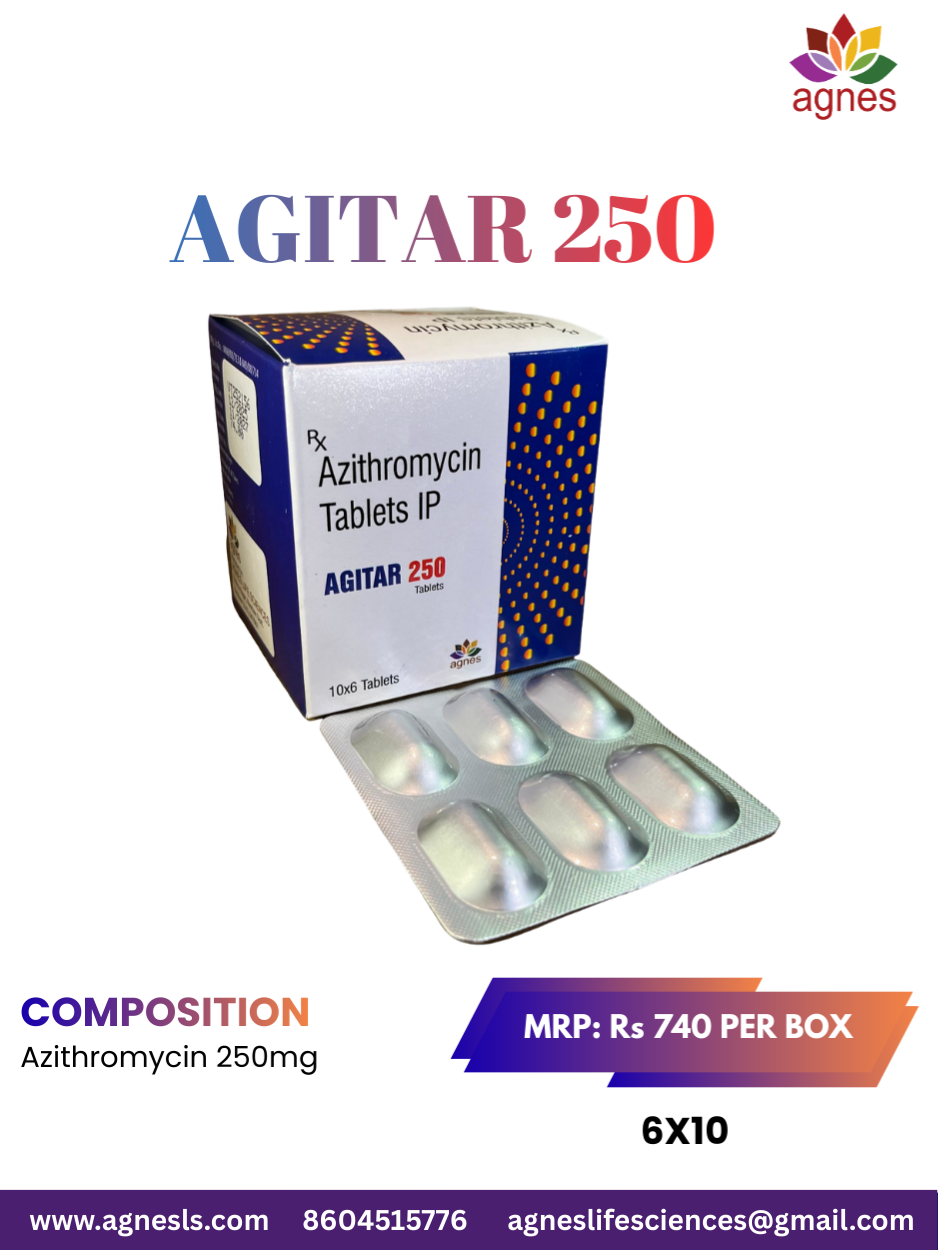
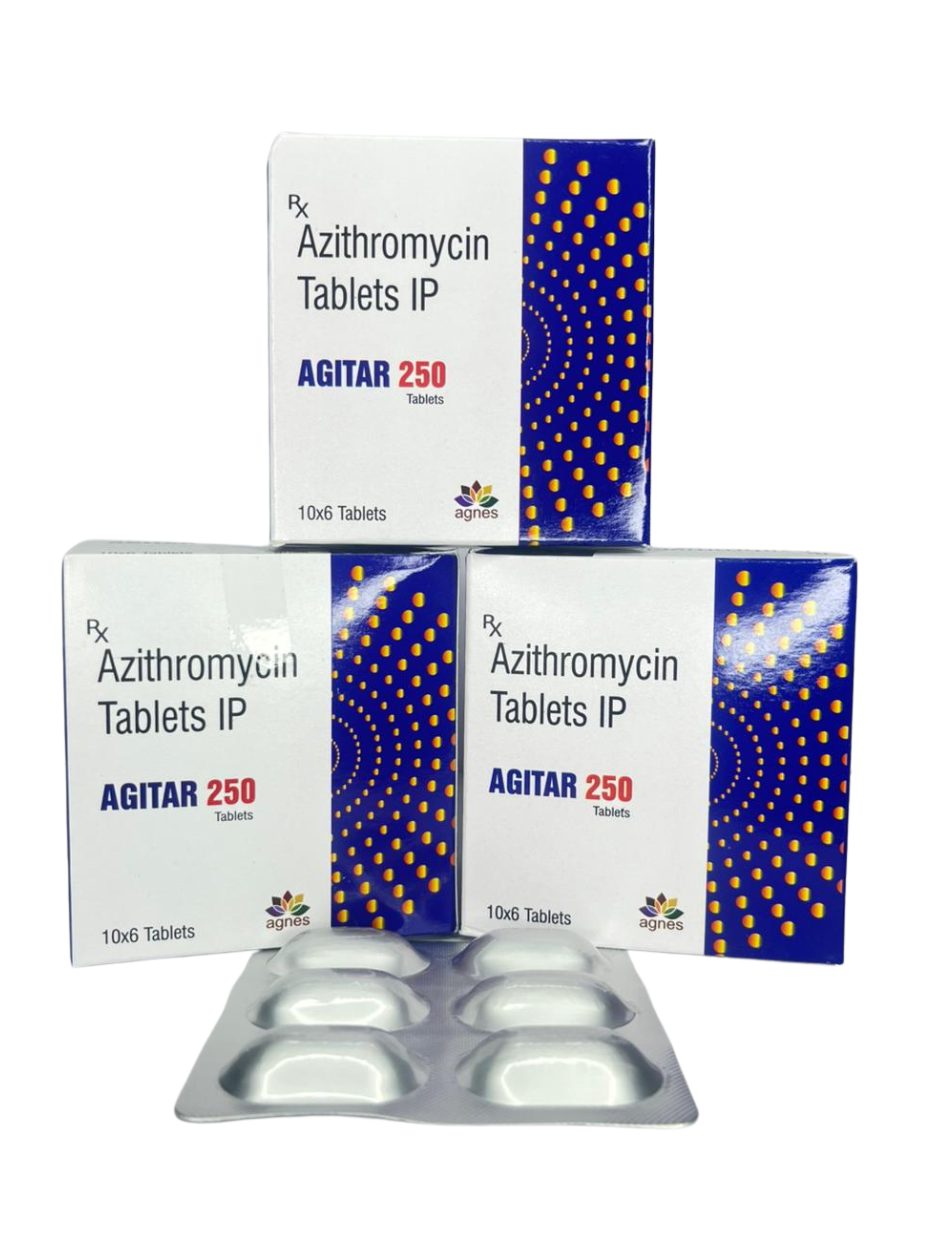
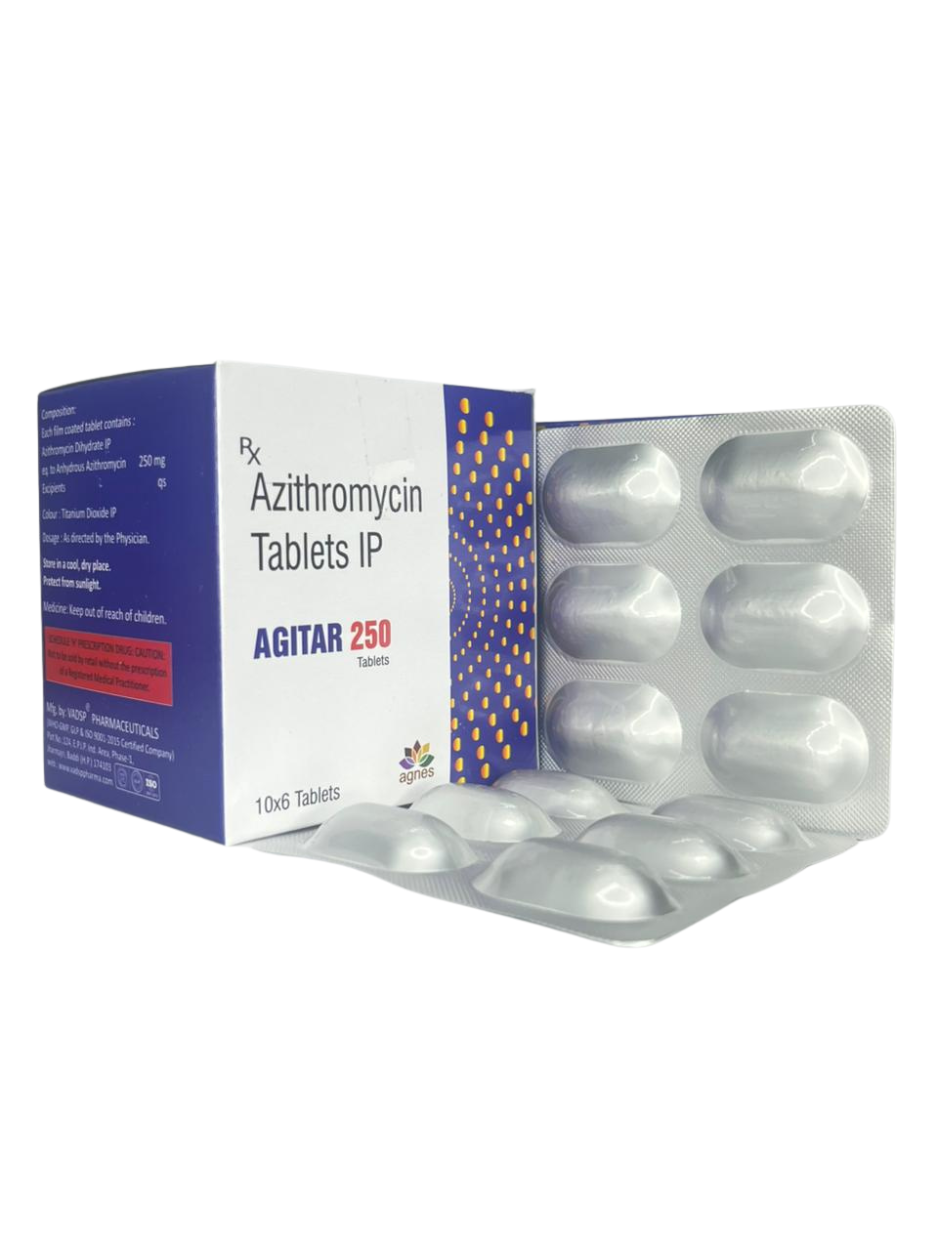
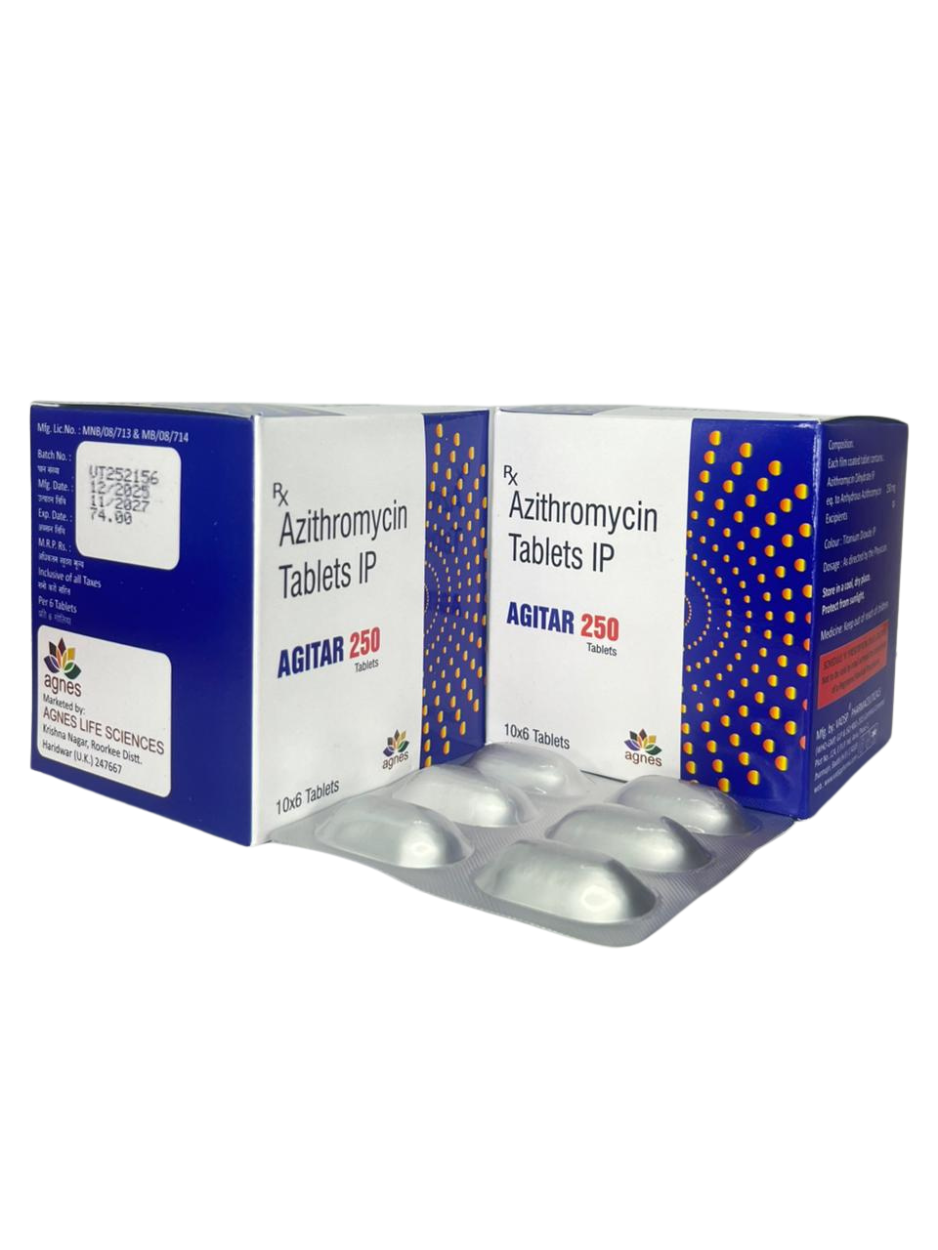
AGITAR 250
Composition
Azithromycin 250mg
Category
Antibiotic (Macrolide Antibiotic)
| Packing |
|---|
ENQUIRY
Indications
AGITAR 250 is indicated for the treatment of mild to moderate infections caused by susceptible strains of designated microorganisms:
Upper Respiratory Tract Infections: Highly effective against acute pharyngitis and tonsillitis caused by Streptococcus pyogenes.
Lower Respiratory Tract Infections: Targeted treatment for acute bacterial exacerbations of chronic obstructive pulmonary disease (COPD) and community-acquired pneumonia.
Otitis Media: Effective for pediatric and adult ear infections caused by Haemophilus influenzae or Moraxella catarrhalis.
Sinusitis: Treats acute bacterial sinusitis where first-line treatments may not be suitable.
Skin and Soft Tissue Infections: Manages uncomplicated skin structure infections caused by Staphylococcus aureus or Streptococcus pyogenes.
Sexually Transmitted Infections (STIs): Specifically used for non-gonococcal urethritis and cervicitis due to Chlamydia trachomatis.
Mycobacterial Infections: Often utilized in the prevention and treatment of disseminated Mycobacterium avium complex (MAC) in immunocompromised individuals.
Upper Respiratory Tract Infections: Highly effective against acute pharyngitis and tonsillitis caused by Streptococcus pyogenes.
Lower Respiratory Tract Infections: Targeted treatment for acute bacterial exacerbations of chronic obstructive pulmonary disease (COPD) and community-acquired pneumonia.
Otitis Media: Effective for pediatric and adult ear infections caused by Haemophilus influenzae or Moraxella catarrhalis.
Sinusitis: Treats acute bacterial sinusitis where first-line treatments may not be suitable.
Skin and Soft Tissue Infections: Manages uncomplicated skin structure infections caused by Staphylococcus aureus or Streptococcus pyogenes.
Sexually Transmitted Infections (STIs): Specifically used for non-gonococcal urethritis and cervicitis due to Chlamydia trachomatis.
Mycobacterial Infections: Often utilized in the prevention and treatment of disseminated Mycobacterium avium complex (MAC) in immunocompromised individuals.
Uses
Bronchitis Management: Effectively clears bacterial pathogens causing inflammation in the bronchial tubes, reducing cough and sputum production.
Throat and Sinus Care: Rapidly alleviates the pain and pressure associated with severe sore throats and sinus congestion.
Bacterial Diarrhea: Frequently prescribed for traveler’s diarrhea when caused by susceptible bacterial strains.
High Tissue Penetration: Unlike some antibiotics, Azithromycin remains in the body tissues at therapeutic levels for an extended period, allowing for shorter treatment courses.
Targeted Action: It works by inhibiting bacterial protein synthesis, effectively stopping the growth of bacteria (bacteriostatic action).
Throat and Sinus Care: Rapidly alleviates the pain and pressure associated with severe sore throats and sinus congestion.
Bacterial Diarrhea: Frequently prescribed for traveler’s diarrhea when caused by susceptible bacterial strains.
High Tissue Penetration: Unlike some antibiotics, Azithromycin remains in the body tissues at therapeutic levels for an extended period, allowing for shorter treatment courses.
Targeted Action: It works by inhibiting bacterial protein synthesis, effectively stopping the growth of bacteria (bacteriostatic action).
Dosage & Storage
Professional Consultation: The dosage of AGITAR 250 must be determined by a healthcare provider based on the specific type of infection and patient weight/age.
Standard Regimens: Often prescribed as a “Z-Pak” style regimen (e.g., 500mg on day one followed by 250mg for the next four days) or as a single 1g dose for specific STIs.
Storage Environment: Keep tablets in their original blister packaging to protect them from light.
Temperature Control: Store at a controlled room temperature (between 15°C and 30°C).
Moisture Protection: Avoid storing in bathrooms or kitchens, as high-humidity environments can cause the chemical breakdown of the active ingredient.
Safety: Ensure the medicine is stored in a locked cabinet or high shelf, out of the reach of children and domestic animals.
Standard Regimens: Often prescribed as a “Z-Pak” style regimen (e.g., 500mg on day one followed by 250mg for the next four days) or as a single 1g dose for specific STIs.
Storage Environment: Keep tablets in their original blister packaging to protect them from light.
Temperature Control: Store at a controlled room temperature (between 15°C and 30°C).
Moisture Protection: Avoid storing in bathrooms or kitchens, as high-humidity environments can cause the chemical breakdown of the active ingredient.
Safety: Ensure the medicine is stored in a locked cabinet or high shelf, out of the reach of children and domestic animals.
Directions For Use
Consistency is Key: Take the tablet at the same time every day to maintain a steady concentration of the drug in the bloodstream.
Administration: Tablets can generally be taken with or without food; however, taking them with a light snack may reduce potential stomach upset.
Full Course Completion: It is vital to finish the entire prescribed pack even if symptoms disappear after two days. Stopping early can lead to antibiotic resistance.
Handling Missed Doses: If a dose is missed, take it as soon as remembered. If it is almost time for the next dose, skip the missed one. Do not double the dose.
Interaction with Antacids: Do not take antacids containing aluminum or magnesium at the same time. Maintain a gap of at least 2 hours before or after taking AGITAR 250.
Administration: Tablets can generally be taken with or without food; however, taking them with a light snack may reduce potential stomach upset.
Full Course Completion: It is vital to finish the entire prescribed pack even if symptoms disappear after two days. Stopping early can lead to antibiotic resistance.
Handling Missed Doses: If a dose is missed, take it as soon as remembered. If it is almost time for the next dose, skip the missed one. Do not double the dose.
Interaction with Antacids: Do not take antacids containing aluminum or magnesium at the same time. Maintain a gap of at least 2 hours before or after taking AGITAR 250.
Precautions
Before starting AGITAR 250, patients must inform their doctor regarding the following:
Liver and Kidney Health: Patients with pre-existing hepatic or renal impairment require careful monitoring, as the drug is primarily metabolized and excreted through these organs.
Cardiac History: Use with caution in patients with a history of QT interval prolongation or heart rhythm disorders.
Myasthenia Gravis: Azithromycin may exacerbate symptoms of this muscle-weakness condition.
Allergic Profiles: Avoid use if there is a known hypersensitivity to Azithromycin, Erythromycin, or any macrolide/ketolide antibiotics.
Drug Interactions: Blood Thinners: May increase the effect of Warfarin, leading to a higher risk of bleeding. Statins: Increased risk of muscle breakdown (rhabdomyolysis) when taken with Atorvastatin or Simvastatin.
Digoxin: May increase the levels of heart medications in the blood.
Liver and Kidney Health: Patients with pre-existing hepatic or renal impairment require careful monitoring, as the drug is primarily metabolized and excreted through these organs.
Cardiac History: Use with caution in patients with a history of QT interval prolongation or heart rhythm disorders.
Myasthenia Gravis: Azithromycin may exacerbate symptoms of this muscle-weakness condition.
Allergic Profiles: Avoid use if there is a known hypersensitivity to Azithromycin, Erythromycin, or any macrolide/ketolide antibiotics.
Drug Interactions: Blood Thinners: May increase the effect of Warfarin, leading to a higher risk of bleeding. Statins: Increased risk of muscle breakdown (rhabdomyolysis) when taken with Atorvastatin or Simvastatin.
Digoxin: May increase the levels of heart medications in the blood.
Side Effects
Nausea
Vomiting
Diarrhea
Stomach pain
Dizziness
Vomiting
Diarrhea
Stomach pain
Dizziness
Medical Disclaimer
Information Only: The content provided here is for educational purposes and should not replace the advice of a qualified physician.
Prescription Required: AGITAR 250 is a “Schedule H” drug and must only be used under medical supervision.
No Diagnostic Claims: Agnes Life Sciences provides this information as a guide; we do not claim this product can diagnose or cure any condition without a professional clinical assessment.
Consultation: Always speak to your doctor or pharmacist before starting a new medication to ensure it is safe for your specific health profile.
Prescription Required: AGITAR 250 is a “Schedule H” drug and must only be used under medical supervision.
No Diagnostic Claims: Agnes Life Sciences provides this information as a guide; we do not claim this product can diagnose or cure any condition without a professional clinical assessment.
Consultation: Always speak to your doctor or pharmacist before starting a new medication to ensure it is safe for your specific health profile.
Indications
AGITAR 250 is indicated for the treatment of mild to moderate infections caused by susceptible strains of designated microorganisms:
Upper Respiratory Tract Infections: Highly effective against acute pharyngitis and tonsillitis caused by Streptococcus pyogenes.
Lower Respiratory Tract Infections: Targeted treatment for acute bacterial exacerbations of chronic obstructive pulmonary disease (COPD) and community-acquired pneumonia.
Otitis Media: Effective for pediatric and adult ear infections caused by Haemophilus influenzae or Moraxella catarrhalis.
Sinusitis: Treats acute bacterial sinusitis where first-line treatments may not be suitable.
Skin and Soft Tissue Infections: Manages uncomplicated skin structure infections caused by Staphylococcus aureus or Streptococcus pyogenes.
Sexually Transmitted Infections (STIs): Specifically used for non-gonococcal urethritis and cervicitis due to Chlamydia trachomatis.
Mycobacterial Infections: Often utilized in the prevention and treatment of disseminated Mycobacterium avium complex (MAC) in immunocompromised individuals.
Upper Respiratory Tract Infections: Highly effective against acute pharyngitis and tonsillitis caused by Streptococcus pyogenes.
Lower Respiratory Tract Infections: Targeted treatment for acute bacterial exacerbations of chronic obstructive pulmonary disease (COPD) and community-acquired pneumonia.
Otitis Media: Effective for pediatric and adult ear infections caused by Haemophilus influenzae or Moraxella catarrhalis.
Sinusitis: Treats acute bacterial sinusitis where first-line treatments may not be suitable.
Skin and Soft Tissue Infections: Manages uncomplicated skin structure infections caused by Staphylococcus aureus or Streptococcus pyogenes.
Sexually Transmitted Infections (STIs): Specifically used for non-gonococcal urethritis and cervicitis due to Chlamydia trachomatis.
Mycobacterial Infections: Often utilized in the prevention and treatment of disseminated Mycobacterium avium complex (MAC) in immunocompromised individuals.
Uses
Bronchitis Management: Effectively clears bacterial pathogens causing inflammation in the bronchial tubes, reducing cough and sputum production.
Throat and Sinus Care: Rapidly alleviates the pain and pressure associated with severe sore throats and sinus congestion.
Bacterial Diarrhea: Frequently prescribed for traveler’s diarrhea when caused by susceptible bacterial strains.
High Tissue Penetration: Unlike some antibiotics, Azithromycin remains in the body tissues at therapeutic levels for an extended period, allowing for shorter treatment courses.
Targeted Action: It works by inhibiting bacterial protein synthesis, effectively stopping the growth of bacteria (bacteriostatic action).
Throat and Sinus Care: Rapidly alleviates the pain and pressure associated with severe sore throats and sinus congestion.
Bacterial Diarrhea: Frequently prescribed for traveler’s diarrhea when caused by susceptible bacterial strains.
High Tissue Penetration: Unlike some antibiotics, Azithromycin remains in the body tissues at therapeutic levels for an extended period, allowing for shorter treatment courses.
Targeted Action: It works by inhibiting bacterial protein synthesis, effectively stopping the growth of bacteria (bacteriostatic action).
Dosage & Storage
Professional Consultation: The dosage of AGITAR 250 must be determined by a healthcare provider based on the specific type of infection and patient weight/age.
Standard Regimens: Often prescribed as a “Z-Pak” style regimen (e.g., 500mg on day one followed by 250mg for the next four days) or as a single 1g dose for specific STIs.
Storage Environment: Keep tablets in their original blister packaging to protect them from light.
Temperature Control: Store at a controlled room temperature (between 15°C and 30°C).
Moisture Protection: Avoid storing in bathrooms or kitchens, as high-humidity environments can cause the chemical breakdown of the active ingredient.
Safety: Ensure the medicine is stored in a locked cabinet or high shelf, out of the reach of children and domestic animals.
Standard Regimens: Often prescribed as a “Z-Pak” style regimen (e.g., 500mg on day one followed by 250mg for the next four days) or as a single 1g dose for specific STIs.
Storage Environment: Keep tablets in their original blister packaging to protect them from light.
Temperature Control: Store at a controlled room temperature (between 15°C and 30°C).
Moisture Protection: Avoid storing in bathrooms or kitchens, as high-humidity environments can cause the chemical breakdown of the active ingredient.
Safety: Ensure the medicine is stored in a locked cabinet or high shelf, out of the reach of children and domestic animals.
Directions For Use
Consistency is Key: Take the tablet at the same time every day to maintain a steady concentration of the drug in the bloodstream.
Administration: Tablets can generally be taken with or without food; however, taking them with a light snack may reduce potential stomach upset.
Full Course Completion: It is vital to finish the entire prescribed pack even if symptoms disappear after two days. Stopping early can lead to antibiotic resistance.
Handling Missed Doses: If a dose is missed, take it as soon as remembered. If it is almost time for the next dose, skip the missed one. Do not double the dose.
Interaction with Antacids: Do not take antacids containing aluminum or magnesium at the same time. Maintain a gap of at least 2 hours before or after taking AGITAR 250.
Administration: Tablets can generally be taken with or without food; however, taking them with a light snack may reduce potential stomach upset.
Full Course Completion: It is vital to finish the entire prescribed pack even if symptoms disappear after two days. Stopping early can lead to antibiotic resistance.
Handling Missed Doses: If a dose is missed, take it as soon as remembered. If it is almost time for the next dose, skip the missed one. Do not double the dose.
Interaction with Antacids: Do not take antacids containing aluminum or magnesium at the same time. Maintain a gap of at least 2 hours before or after taking AGITAR 250.
Precautions
Before starting AGITAR 250, patients must inform their doctor regarding the following:
Liver and Kidney Health: Patients with pre-existing hepatic or renal impairment require careful monitoring, as the drug is primarily metabolized and excreted through these organs.
Cardiac History: Use with caution in patients with a history of QT interval prolongation or heart rhythm disorders.
Myasthenia Gravis: Azithromycin may exacerbate symptoms of this muscle-weakness condition.
Allergic Profiles: Avoid use if there is a known hypersensitivity to Azithromycin, Erythromycin, or any macrolide/ketolide antibiotics.
Drug Interactions: Blood Thinners: May increase the effect of Warfarin, leading to a higher risk of bleeding. Statins: Increased risk of muscle breakdown (rhabdomyolysis) when taken with Atorvastatin or Simvastatin.
Digoxin: May increase the levels of heart medications in the blood.
Liver and Kidney Health: Patients with pre-existing hepatic or renal impairment require careful monitoring, as the drug is primarily metabolized and excreted through these organs.
Cardiac History: Use with caution in patients with a history of QT interval prolongation or heart rhythm disorders.
Myasthenia Gravis: Azithromycin may exacerbate symptoms of this muscle-weakness condition.
Allergic Profiles: Avoid use if there is a known hypersensitivity to Azithromycin, Erythromycin, or any macrolide/ketolide antibiotics.
Drug Interactions: Blood Thinners: May increase the effect of Warfarin, leading to a higher risk of bleeding. Statins: Increased risk of muscle breakdown (rhabdomyolysis) when taken with Atorvastatin or Simvastatin.
Digoxin: May increase the levels of heart medications in the blood.
Side Effects
Nausea
Vomiting
Diarrhea
Stomach pain
Dizziness
Vomiting
Diarrhea
Stomach pain
Dizziness
Medical Disclaimer
Information Only: The content provided here is for educational purposes and should not replace the advice of a qualified physician.
Prescription Required: AGITAR 250 is a “Schedule H” drug and must only be used under medical supervision.
No Diagnostic Claims: Agnes Life Sciences provides this information as a guide; we do not claim this product can diagnose or cure any condition without a professional clinical assessment.
Consultation: Always speak to your doctor or pharmacist before starting a new medication to ensure it is safe for your specific health profile.
Prescription Required: AGITAR 250 is a “Schedule H” drug and must only be used under medical supervision.
No Diagnostic Claims: Agnes Life Sciences provides this information as a guide; we do not claim this product can diagnose or cure any condition without a professional clinical assessment.
Consultation: Always speak to your doctor or pharmacist before starting a new medication to ensure it is safe for your specific health profile.