Indications
ITRAG-200 is indicated for a wide range of clinical conditions where a robust antifungal response is mandatory:
Severe or Systemic Fungal Infections: Targeted for life-threatening infections that have spread throughout the body, including the blood, lungs, and central nervous system.
Effective Against Deep Mycoses: Treatment of internal fungal infections that penetrate deep into the organs or bone structures.
Fungal Nail Infections (Onychomycosis): Specifically used for severe fungal infections of the fingernails or toenails that have not responded to topical treatments or lower-dose oral therapies.
Suitable for Resistant Fungal Strains: Acts as a primary therapeutic choice when fungal strains show reduced sensitivity to Fluconazole or other common antifungals.
Blastomycosis and Histoplasmosis: Clinical management of these serious pulmonary and extrapulmonary fungal diseases is often found in specific geographical regions.
Aspergillosis: Used as an alternative or primary treatment for invasive aspergillosis in patients who are intolerant to other medications.
Candidiasis: Management of refractory esophageal or oropharyngeal candidiasis, especially in immunocompromised individuals.
Severe or Systemic Fungal Infections: Targeted for life-threatening infections that have spread throughout the body, including the blood, lungs, and central nervous system.
Effective Against Deep Mycoses: Treatment of internal fungal infections that penetrate deep into the organs or bone structures.
Fungal Nail Infections (Onychomycosis): Specifically used for severe fungal infections of the fingernails or toenails that have not responded to topical treatments or lower-dose oral therapies.
Suitable for Resistant Fungal Strains: Acts as a primary therapeutic choice when fungal strains show reduced sensitivity to Fluconazole or other common antifungals.
Blastomycosis and Histoplasmosis: Clinical management of these serious pulmonary and extrapulmonary fungal diseases is often found in specific geographical regions.
Aspergillosis: Used as an alternative or primary treatment for invasive aspergillosis in patients who are intolerant to other medications.
Candidiasis: Management of refractory esophageal or oropharyngeal candidiasis, especially in immunocompromised individuals.
Uses
The therapeutic utility of ITRAG-200 is centered on its superior tissue distribution and long-lasting antifungal activity:
High-Concentration Fungicidal Action: The 200 mg dosage ensures that the concentration of the drug in the skin, nails, and vital organs remains above the Minimum Inhibitory Concentration (MIC) for longer periods.
Keratin-Binding Properties: Itraconazole has a unique affinity for keratin, allowing the medicine to “bind” to the skin and nails, providing a reservoir of antifungal activity even after the dose is taken.
Management of Systemic Outbreaks: It is used to halt the systemic spread of spores, preventing the colonization of the fungal infection in secondary organs.
Effective Pulse Therapy: Due to its long half-life, ITRAG-200 is often used in pulse dosing (high-dose intervals) to clear chronic infections while minimizing long-term exposure.
Prevention in Immunocompromised Patients: Helps prevent opportunistic fungal infections in patients with weakened immune systems due to underlying health conditions.
Restoration of Tissue Integrity: By eliminating the root cause of the infection, it allows for the natural regeneration of healthy skin and nail tissue.
High-Concentration Fungicidal Action: The 200 mg dosage ensures that the concentration of the drug in the skin, nails, and vital organs remains above the Minimum Inhibitory Concentration (MIC) for longer periods.
Keratin-Binding Properties: Itraconazole has a unique affinity for keratin, allowing the medicine to “bind” to the skin and nails, providing a reservoir of antifungal activity even after the dose is taken.
Management of Systemic Outbreaks: It is used to halt the systemic spread of spores, preventing the colonization of the fungal infection in secondary organs.
Effective Pulse Therapy: Due to its long half-life, ITRAG-200 is often used in pulse dosing (high-dose intervals) to clear chronic infections while minimizing long-term exposure.
Prevention in Immunocompromised Patients: Helps prevent opportunistic fungal infections in patients with weakened immune systems due to underlying health conditions.
Restoration of Tissue Integrity: By eliminating the root cause of the infection, it allows for the natural regeneration of healthy skin and nail tissue.
Dosage & Storage
Proper handling and adherence to the prescribed schedule are essential for the safety and efficacy of ITRAG-200:
Standard Adult Dosage: The dosage for ITRAG-200 is strictly determined by a physician. For systemic infections, one or two capsules per day may be required.
Duration of Treatment: Fungal infections are slow-growing; therefore, the course may last from a few weeks to several months. Never stop the medication early, as this can lead to the development of drug-resistant fungal strains.
Storage Temperature: Store in a cool, dry place below 25°C. Protect the capsules from extreme heat, as Itraconazole is temperature-sensitive.
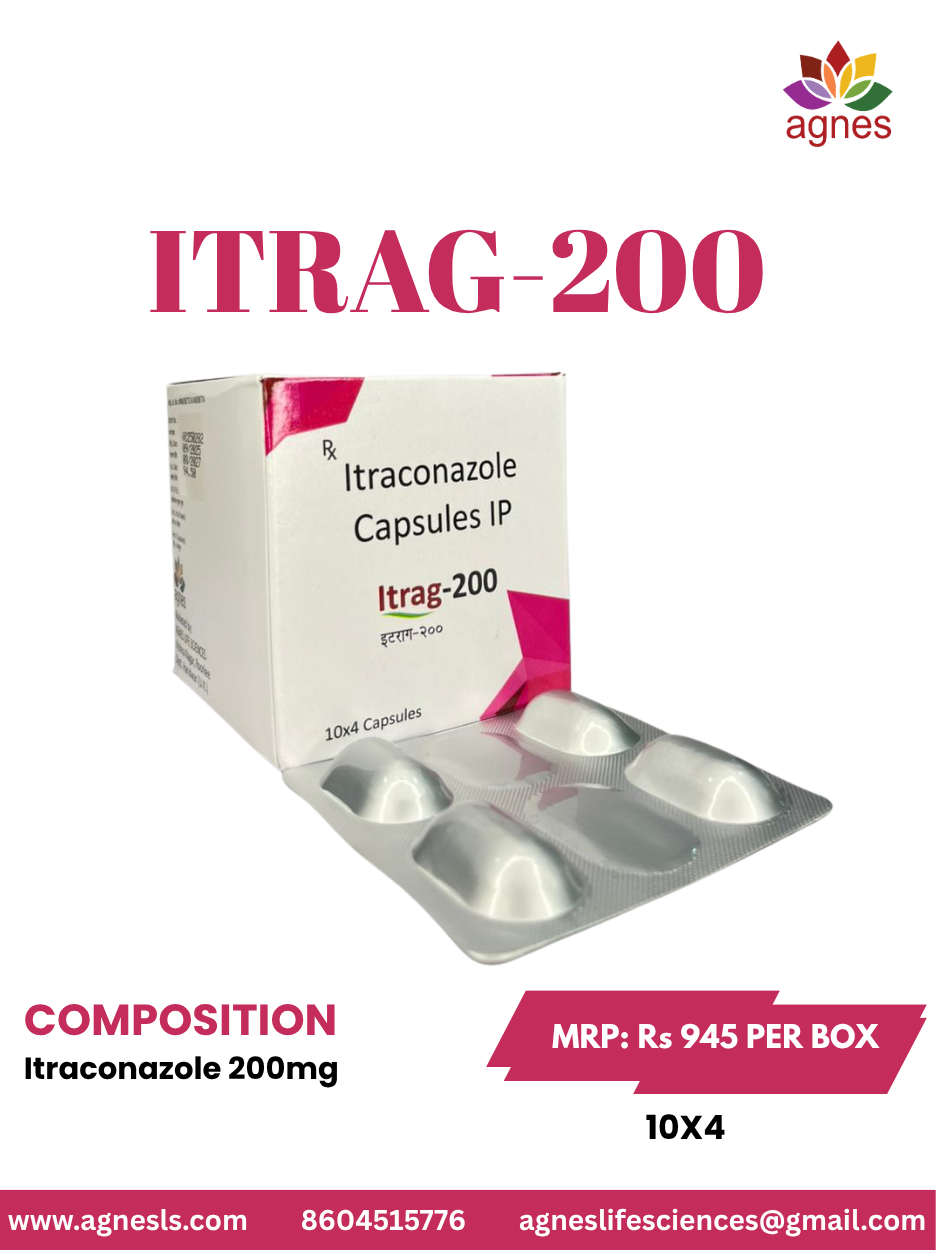
Environmental Protection: Keep the capsules in their original moisture-resistant Alu-Alu or blister packaging. Do not transfer to pill organizers that are not airtight.
Safety Protocol: Keep all pharmaceutical products out of the sight and reach of children and pets
Standard Adult Dosage: The dosage for ITRAG-200 is strictly determined by a physician. For systemic infections, one or two capsules per day may be required.
Duration of Treatment: Fungal infections are slow-growing; therefore, the course may last from a few weeks to several months. Never stop the medication early, as this can lead to the development of drug-resistant fungal strains.
Storage Temperature: Store in a cool, dry place below 25°C. Protect the capsules from extreme heat, as Itraconazole is temperature-sensitive.
Environmental Protection: Keep the capsules in their original moisture-resistant Alu-Alu or blister packaging. Do not transfer to pill organizers that are not airtight.
Safety Protocol: Keep all pharmaceutical products out of the sight and reach of children and pets
Directions For Use
To ensure that the 200 mg of Itraconazole is absorbed correctly into your system, follow these clinical instructions:
Bioavailability and Food: ITRAG-200 is best absorbed when taken immediately after a full, fatty meal. An acidic stomach environment is necessary for the medication to dissolve and enter the bloodstream.
Interaction with Acidity: If you are taking antacids or H2 blockers, take ITRAG-200 at least 2 hours apart. If you have low stomach acid, taking the capsule with a carbonated “cola” beverage may improve absorption.
Administration: Swallow the capsule whole with a glass of water. Do not chew, break, or open the capsule, as this can lead to sub-therapeutic blood levels or increased side effects.
Consistent Timing: Take your dose at the same time every day to ensure a steady “antifungal shield” in your body.
Missed Dose: If you miss a dose, take it with food as soon as you remember. If it is almost time for your next dose, skip the missed one. Do not double the dose.
Bioavailability and Food: ITRAG-200 is best absorbed when taken immediately after a full, fatty meal. An acidic stomach environment is necessary for the medication to dissolve and enter the bloodstream.
Interaction with Acidity: If you are taking antacids or H2 blockers, take ITRAG-200 at least 2 hours apart. If you have low stomach acid, taking the capsule with a carbonated “cola” beverage may improve absorption.
Administration: Swallow the capsule whole with a glass of water. Do not chew, break, or open the capsule, as this can lead to sub-therapeutic blood levels or increased side effects.
Consistent Timing: Take your dose at the same time every day to ensure a steady “antifungal shield” in your body.
Missed Dose: If you miss a dose, take it with food as soon as you remember. If it is almost time for your next dose, skip the missed one. Do not double the dose.
Precautions
Given the high potency of ITRAG-200, patients must observe the following medical safeguards:
Hepatotoxicity Monitoring: Since Itraconazole is processed by the liver, regular Liver Function Tests (LFTs) are recommended for patients on long-term therapy. Notify your doctor of any signs of jaundice (yellowing skin/eyes).
Cardiac Considerations: Inform your healthcare provider if you have a history of heart failure or structural heart disease.
Drug Interactions: Itraconazole has a high potential for interacting with other drugs, including blood thinners, statins, and certain sedatives. Always share a complete list of your medications with your doctor.
Pregnancy and Breastfeeding: ITRAG-200 is generally not recommended during pregnancy or for women planning to become pregnant. Consult your doctor for alternative therapies if necessary.
Kidney Impairment: Patients with renal issues may require dose adjustments or more frequent monitoring.
Hearing Changes: In rare cases, transient or permanent hearing loss has been reported. Discontinue use and contact your doctor if you experience ringing in the ears.
Hepatotoxicity Monitoring: Since Itraconazole is processed by the liver, regular Liver Function Tests (LFTs) are recommended for patients on long-term therapy. Notify your doctor of any signs of jaundice (yellowing skin/eyes).
Cardiac Considerations: Inform your healthcare provider if you have a history of heart failure or structural heart disease.
Drug Interactions: Itraconazole has a high potential for interacting with other drugs, including blood thinners, statins, and certain sedatives. Always share a complete list of your medications with your doctor.
Pregnancy and Breastfeeding: ITRAG-200 is generally not recommended during pregnancy or for women planning to become pregnant. Consult your doctor for alternative therapies if necessary.
Kidney Impairment: Patients with renal issues may require dose adjustments or more frequent monitoring.
Hearing Changes: In rare cases, transient or permanent hearing loss has been reported. Discontinue use and contact your doctor if you experience ringing in the ears.
Side Effects
Nausea
Hepatotoxicity
Dizziness
GI discomfort
Itching
Hepatotoxicity
Dizziness
GI discomfort
Itching
Medical Disclaimer
The information provided is for educational and informational purposes only and is not intended as medical advice. Always consult a healthcare professional for medical advice, diagnosis, or treatment. Agnes Life Sciences does not claim that any of its products can diagnose, treat, cure or prevent any disease. ITRAG-200 is a prescription-only medication and should only be used under the direct supervision of a licensed medical practitioner.
Indications
ITRAG-200 is indicated for a wide range of clinical conditions where a robust antifungal response is mandatory:
Severe or Systemic Fungal Infections: Targeted for life-threatening infections that have spread throughout the body, including the blood, lungs, and central nervous system.
Effective Against Deep Mycoses: Treatment of internal fungal infections that penetrate deep into the organs or bone structures.
Fungal Nail Infections (Onychomycosis): Specifically used for severe fungal infections of the fingernails or toenails that have not responded to topical treatments or lower-dose oral therapies.
Suitable for Resistant Fungal Strains: Acts as a primary therapeutic choice when fungal strains show reduced sensitivity to Fluconazole or other common antifungals.
Blastomycosis and Histoplasmosis: Clinical management of these serious pulmonary and extrapulmonary fungal diseases is often found in specific geographical regions.
Aspergillosis: Used as an alternative or primary treatment for invasive aspergillosis in patients who are intolerant to other medications.
Candidiasis: Management of refractory esophageal or oropharyngeal candidiasis, especially in immunocompromised individuals.
Severe or Systemic Fungal Infections: Targeted for life-threatening infections that have spread throughout the body, including the blood, lungs, and central nervous system.
Effective Against Deep Mycoses: Treatment of internal fungal infections that penetrate deep into the organs or bone structures.
Fungal Nail Infections (Onychomycosis): Specifically used for severe fungal infections of the fingernails or toenails that have not responded to topical treatments or lower-dose oral therapies.
Suitable for Resistant Fungal Strains: Acts as a primary therapeutic choice when fungal strains show reduced sensitivity to Fluconazole or other common antifungals.
Blastomycosis and Histoplasmosis: Clinical management of these serious pulmonary and extrapulmonary fungal diseases is often found in specific geographical regions.
Aspergillosis: Used as an alternative or primary treatment for invasive aspergillosis in patients who are intolerant to other medications.
Candidiasis: Management of refractory esophageal or oropharyngeal candidiasis, especially in immunocompromised individuals.
Uses
The therapeutic utility of ITRAG-200 is centered on its superior tissue distribution and long-lasting antifungal activity:
High-Concentration Fungicidal Action: The 200 mg dosage ensures that the concentration of the drug in the skin, nails, and vital organs remains above the Minimum Inhibitory Concentration (MIC) for longer periods.
Keratin-Binding Properties: Itraconazole has a unique affinity for keratin, allowing the medicine to “bind” to the skin and nails, providing a reservoir of antifungal activity even after the dose is taken.
Management of Systemic Outbreaks: It is used to halt the systemic spread of spores, preventing the colonization of the fungal infection in secondary organs.
Effective Pulse Therapy: Due to its long half-life, ITRAG-200 is often used in pulse dosing (high-dose intervals) to clear chronic infections while minimizing long-term exposure.
Prevention in Immunocompromised Patients: Helps prevent opportunistic fungal infections in patients with weakened immune systems due to underlying health conditions.
Restoration of Tissue Integrity: By eliminating the root cause of the infection, it allows for the natural regeneration of healthy skin and nail tissue.
High-Concentration Fungicidal Action: The 200 mg dosage ensures that the concentration of the drug in the skin, nails, and vital organs remains above the Minimum Inhibitory Concentration (MIC) for longer periods.
Keratin-Binding Properties: Itraconazole has a unique affinity for keratin, allowing the medicine to “bind” to the skin and nails, providing a reservoir of antifungal activity even after the dose is taken.
Management of Systemic Outbreaks: It is used to halt the systemic spread of spores, preventing the colonization of the fungal infection in secondary organs.
Effective Pulse Therapy: Due to its long half-life, ITRAG-200 is often used in pulse dosing (high-dose intervals) to clear chronic infections while minimizing long-term exposure.
Prevention in Immunocompromised Patients: Helps prevent opportunistic fungal infections in patients with weakened immune systems due to underlying health conditions.
Restoration of Tissue Integrity: By eliminating the root cause of the infection, it allows for the natural regeneration of healthy skin and nail tissue.
Dosage & Storage
Proper handling and adherence to the prescribed schedule are essential for the safety and efficacy of ITRAG-200:
Standard Adult Dosage: The dosage for ITRAG-200 is strictly determined by a physician. For systemic infections, one or two capsules per day may be required.
Duration of Treatment: Fungal infections are slow-growing; therefore, the course may last from a few weeks to several months. Never stop the medication early, as this can lead to the development of drug-resistant fungal strains.
Storage Temperature: Store in a cool, dry place below 25°C. Protect the capsules from extreme heat, as Itraconazole is temperature-sensitive.
Environmental Protection: Keep the capsules in their original moisture-resistant Alu-Alu or blister packaging. Do not transfer to pill organizers that are not airtight.
Safety Protocol: Keep all pharmaceutical products out of the sight and reach of children and pets
Standard Adult Dosage: The dosage for ITRAG-200 is strictly determined by a physician. For systemic infections, one or two capsules per day may be required.
Duration of Treatment: Fungal infections are slow-growing; therefore, the course may last from a few weeks to several months. Never stop the medication early, as this can lead to the development of drug-resistant fungal strains.
Storage Temperature: Store in a cool, dry place below 25°C. Protect the capsules from extreme heat, as Itraconazole is temperature-sensitive.
Environmental Protection: Keep the capsules in their original moisture-resistant Alu-Alu or blister packaging. Do not transfer to pill organizers that are not airtight.
Safety Protocol: Keep all pharmaceutical products out of the sight and reach of children and pets
Directions For Use
To ensure that the 200 mg of Itraconazole is absorbed correctly into your system, follow these clinical instructions:
Bioavailability and Food: ITRAG-200 is best absorbed when taken immediately after a full, fatty meal. An acidic stomach environment is necessary for the medication to dissolve and enter the bloodstream.
Interaction with Acidity: If you are taking antacids or H2 blockers, take ITRAG-200 at least 2 hours apart. If you have low stomach acid, taking the capsule with a carbonated “cola” beverage may improve absorption.
Administration: Swallow the capsule whole with a glass of water. Do not chew, break, or open the capsule, as this can lead to sub-therapeutic blood levels or increased side effects.
Consistent Timing: Take your dose at the same time every day to ensure a steady “antifungal shield” in your body.
Missed Dose: If you miss a dose, take it with food as soon as you remember. If it is almost time for your next dose, skip the missed one. Do not double the dose.
Bioavailability and Food: ITRAG-200 is best absorbed when taken immediately after a full, fatty meal. An acidic stomach environment is necessary for the medication to dissolve and enter the bloodstream.
Interaction with Acidity: If you are taking antacids or H2 blockers, take ITRAG-200 at least 2 hours apart. If you have low stomach acid, taking the capsule with a carbonated “cola” beverage may improve absorption.
Administration: Swallow the capsule whole with a glass of water. Do not chew, break, or open the capsule, as this can lead to sub-therapeutic blood levels or increased side effects.
Consistent Timing: Take your dose at the same time every day to ensure a steady “antifungal shield” in your body.
Missed Dose: If you miss a dose, take it with food as soon as you remember. If it is almost time for your next dose, skip the missed one. Do not double the dose.
Precautions
Given the high potency of ITRAG-200, patients must observe the following medical safeguards:
Hepatotoxicity Monitoring: Since Itraconazole is processed by the liver, regular Liver Function Tests (LFTs) are recommended for patients on long-term therapy. Notify your doctor of any signs of jaundice (yellowing skin/eyes).
Cardiac Considerations: Inform your healthcare provider if you have a history of heart failure or structural heart disease.
Drug Interactions: Itraconazole has a high potential for interacting with other drugs, including blood thinners, statins, and certain sedatives. Always share a complete list of your medications with your doctor.
Pregnancy and Breastfeeding: ITRAG-200 is generally not recommended during pregnancy or for women planning to become pregnant. Consult your doctor for alternative therapies if necessary.
Kidney Impairment: Patients with renal issues may require dose adjustments or more frequent monitoring.
Hearing Changes: In rare cases, transient or permanent hearing loss has been reported. Discontinue use and contact your doctor if you experience ringing in the ears.
Hepatotoxicity Monitoring: Since Itraconazole is processed by the liver, regular Liver Function Tests (LFTs) are recommended for patients on long-term therapy. Notify your doctor of any signs of jaundice (yellowing skin/eyes).
Cardiac Considerations: Inform your healthcare provider if you have a history of heart failure or structural heart disease.
Drug Interactions: Itraconazole has a high potential for interacting with other drugs, including blood thinners, statins, and certain sedatives. Always share a complete list of your medications with your doctor.
Pregnancy and Breastfeeding: ITRAG-200 is generally not recommended during pregnancy or for women planning to become pregnant. Consult your doctor for alternative therapies if necessary.
Kidney Impairment: Patients with renal issues may require dose adjustments or more frequent monitoring.
Hearing Changes: In rare cases, transient or permanent hearing loss has been reported. Discontinue use and contact your doctor if you experience ringing in the ears.
Side Effects
Nausea
Hepatotoxicity
Dizziness
GI discomfort
Itching
Hepatotoxicity
Dizziness
GI discomfort
Itching
Medical Disclaimer
The information provided is for educational and informational purposes only and is not intended as medical advice. Always consult a healthcare professional for medical advice, diagnosis, or treatment. Agnes Life Sciences does not claim that any of its products can diagnose, treat, cure or prevent any disease. ITRAG-200 is a prescription-only medication and should only be used under the direct supervision of a licensed medical practitioner.