Indications
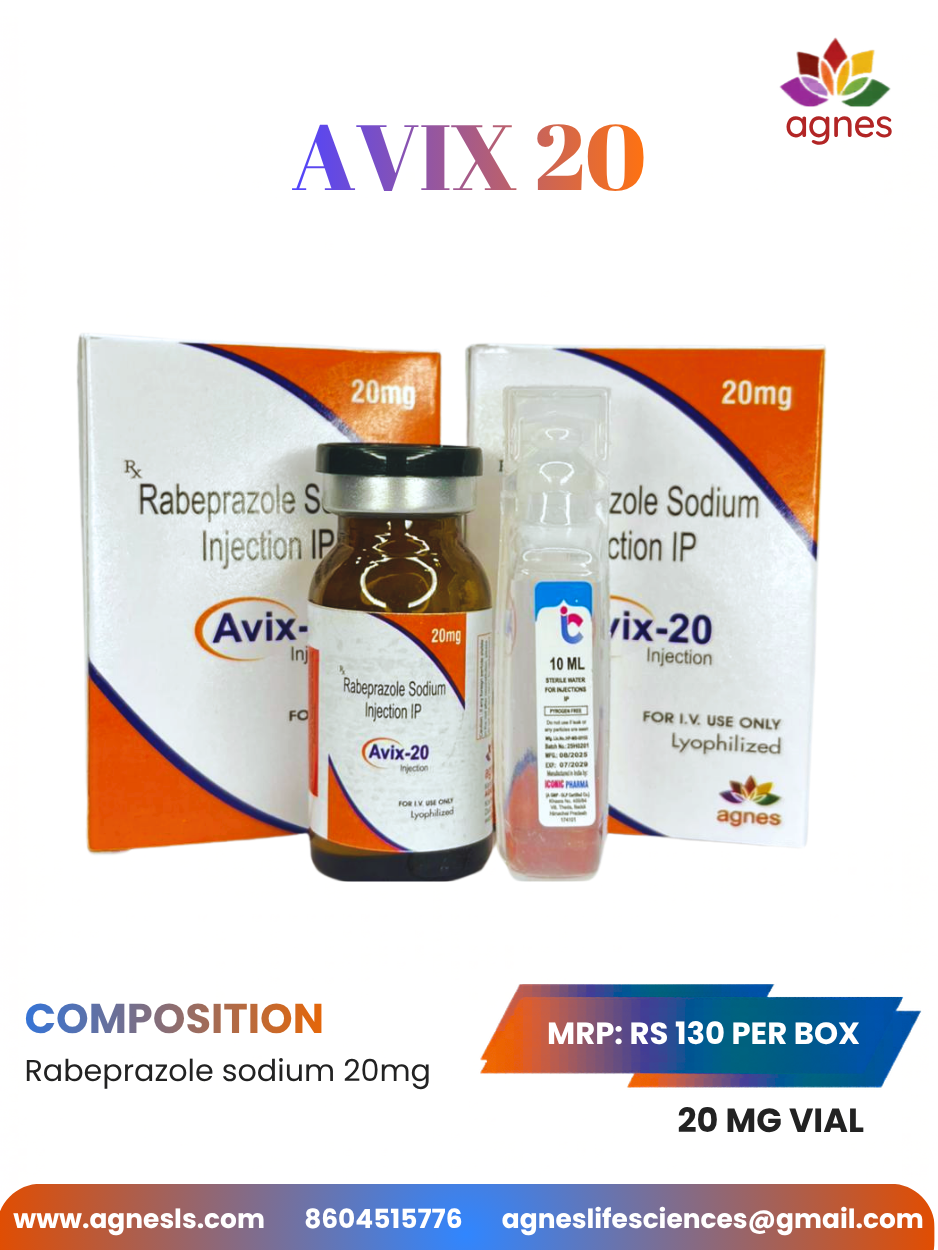
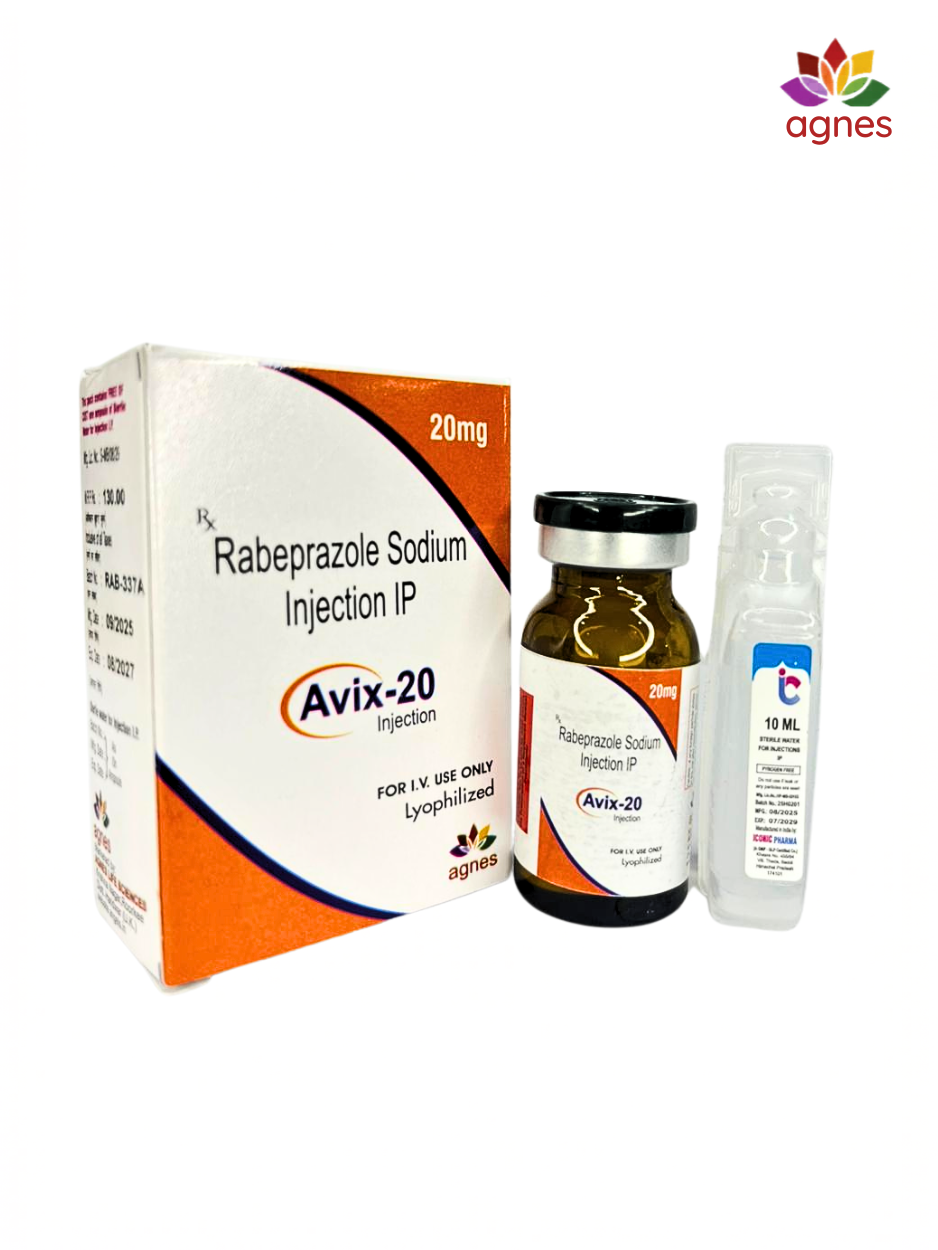
AVIX 20 is an injectable proton pump inhibitor (PPI) used in hospitals to reduce the amount of acid produced in the stomach. It is given intravenously when patients cannot take oral tablets — such as after surgery, during critical illness, or when the problem needs faster control. It is prescribed for:
Gastroesophageal Reflux Disease (GERD): Used when acid reflux is causing serious symptoms and oral medication is not possible or has not worked fast enough.
Peptic Ulcers: Helps treat and heal ulcers in the stomach or the upper part of the small intestine by reducing acid that damages the lining.
Upper GI Bleeding: Used in hospitals to control and prevent bleeding from peptic ulcers or erosions in the stomach and food pipe.
Stress-Related Mucosal Disease: Prescribed in critically ill, ICU, or post-operative patients who are at risk of developing stomach erosions or ulcers due to physical stress.
Zollinger-Ellison Syndrome: A condition where the stomach produces way too much acid; Rabeprazole helps keep acid levels under control.
Post-Operative Acid Suppression: Given after surgeries, especially abdominal procedures, to protect the stomach lining while the patient recovers.
Erosive Esophagitis: Treats inflammation and damage to the food pipe caused by continuous acid exposure. Prevention of NSAID-Induced Ulcers: Used in patients who need to take pain killers or anti-inflammatory drugs that can irritate the stomach, to protect the stomach lining.
Gastroesophageal Reflux Disease (GERD): Used when acid reflux is causing serious symptoms and oral medication is not possible or has not worked fast enough.
Peptic Ulcers: Helps treat and heal ulcers in the stomach or the upper part of the small intestine by reducing acid that damages the lining.
Upper GI Bleeding: Used in hospitals to control and prevent bleeding from peptic ulcers or erosions in the stomach and food pipe.
Stress-Related Mucosal Disease: Prescribed in critically ill, ICU, or post-operative patients who are at risk of developing stomach erosions or ulcers due to physical stress.
Zollinger-Ellison Syndrome: A condition where the stomach produces way too much acid; Rabeprazole helps keep acid levels under control.
Post-Operative Acid Suppression: Given after surgeries, especially abdominal procedures, to protect the stomach lining while the patient recovers.
Erosive Esophagitis: Treats inflammation and damage to the food pipe caused by continuous acid exposure. Prevention of NSAID-Induced Ulcers: Used in patients who need to take pain killers or anti-inflammatory drugs that can irritate the stomach, to protect the stomach lining.
Uses
AVIX 20 contains Rabeprazole Sodium, which belongs to a group of medicines called proton pump inhibitors (PPIs). In simple terms, there are tiny pumps in the stomach lining that produce acid. Rabeprazole blocks these pumps directly, reducing the amount of acid the stomach makes. Less acid means less irritation, faster healing, and relief from symptoms like burning, pain, and discomfort.
Reduces Stomach Acid Fast: As an injectable, it works much faster than oral tablets — important in emergency or post-operative situations where quick acid control is needed.
Heals Stomach and Food Pipe Damage: By keeping acid levels low, it allows the damaged lining of the stomach and food pipe to repair itself naturally.
Controls Upper GI Bleeding: Lowering acid helps stop bleeding from ulcers and prevents it from coming back during hospital treatment.
Protects ICU Patients: Critically ill patients are prone to stress ulcers. AVIX 20 helps prevent this from developing into a serious problem.
Supports Post-Surgical Recovery: Keeping acid under control after surgery reduces the risk of stomach complications and supports smooth recovery.
Prevents Further Damage: Used as a protective measure in patients on NSAIDs or other medicines known to irritate the stomach lining.
Reduces Stomach Acid Fast: As an injectable, it works much faster than oral tablets — important in emergency or post-operative situations where quick acid control is needed.
Heals Stomach and Food Pipe Damage: By keeping acid levels low, it allows the damaged lining of the stomach and food pipe to repair itself naturally.
Controls Upper GI Bleeding: Lowering acid helps stop bleeding from ulcers and prevents it from coming back during hospital treatment.
Protects ICU Patients: Critically ill patients are prone to stress ulcers. AVIX 20 helps prevent this from developing into a serious problem.
Supports Post-Surgical Recovery: Keeping acid under control after surgery reduces the risk of stomach complications and supports smooth recovery.
Prevents Further Damage: Used as a protective measure in patients on NSAIDs or other medicines known to irritate the stomach lining.
Dosage & Storage Title
Dosage: The dose and frequency are decided by the treating doctor based on the patient’s condition, severity of symptoms, and overall health status.
Route of Administration: Given only as a slow intravenous (IV) injection or infusion by a trained healthcare professional. Not for IM or oral use.
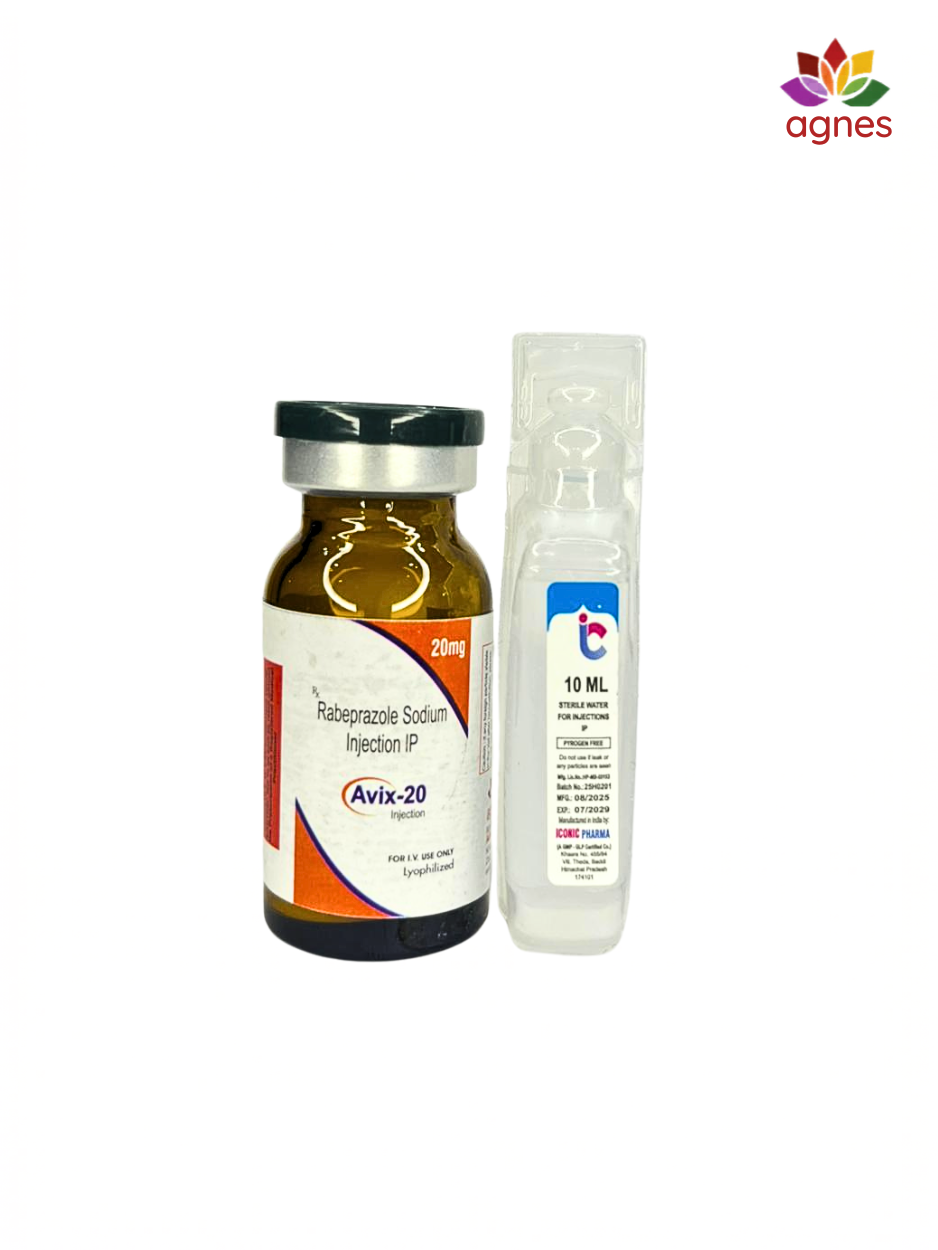
Reconstitution: The lyophilized (freeze-dried) powder in the vial must be dissolved in the provided sterile water for injection before use. Follow the preparation instructions carefully.
Storage: Store the dry vial at room temperature between 15°C and 30°C, in a cool and dry place.
Light Protection: Keep in the original packaging away from direct sunlight.
After Reconstitution: Use the prepared solution immediately or as directed. Do not store the mixed solution for later use.
Single Use: Each vial is for single use only. Discard any leftover solution after the dose.
Keep Out of Reach: Store safely away from children and pets.
Route of Administration: Given only as a slow intravenous (IV) injection or infusion by a trained healthcare professional. Not for IM or oral use.
Reconstitution: The lyophilized (freeze-dried) powder in the vial must be dissolved in the provided sterile water for injection before use. Follow the preparation instructions carefully.
Storage: Store the dry vial at room temperature between 15°C and 30°C, in a cool and dry place.
Light Protection: Keep in the original packaging away from direct sunlight.
After Reconstitution: Use the prepared solution immediately or as directed. Do not store the mixed solution for later use.
Single Use: Each vial is for single use only. Discard any leftover solution after the dose.
Keep Out of Reach: Store safely away from children and pets.
Directions For Use Title
Hospital Use Only: AVIX 20 is strictly for use in a hospital or clinical setting and must be prepared and given by a qualified doctor or nurse.
Do Not Self-Administer: This injection must never be given by the patient at home. Always have it administered by a healthcare professional.
Reconstitute Correctly: The powder must be fully dissolved in the correct volume of sterile water before administration. Do not use if the solution appears cloudy or has visible particles after mixing.
Give Slowly: The injection should be given as a slow IV push or infusion over the recommended time. Do not rush the administration.
Complete the Course: Follow the full treatment plan prescribed by your doctor. Do not stop on your own, even if symptoms improve quickly.
Transition to Oral: Once the patient is able to take medicines by mouth, the doctor will typically switch from the injection to an oral Rabeprazole tablet to continue treatment.
Missed Dose: If a scheduled hospital dose is missed, inform the treating doctor or nurse immediately.
Do Not Self-Administer: This injection must never be given by the patient at home. Always have it administered by a healthcare professional.
Reconstitute Correctly: The powder must be fully dissolved in the correct volume of sterile water before administration. Do not use if the solution appears cloudy or has visible particles after mixing.
Give Slowly: The injection should be given as a slow IV push or infusion over the recommended time. Do not rush the administration.
Complete the Course: Follow the full treatment plan prescribed by your doctor. Do not stop on your own, even if symptoms improve quickly.
Transition to Oral: Once the patient is able to take medicines by mouth, the doctor will typically switch from the injection to an oral Rabeprazole tablet to continue treatment.
Missed Dose: If a scheduled hospital dose is missed, inform the treating doctor or nurse immediately.
Precautions Title
Before starting AVIX 20, the doctor should be informed about the following:
Allergy to PPIs: Do not use if you have had an allergic reaction to Rabeprazole, Omeprazole, Pantoprazole, or any other proton pump inhibitor before.
Liver Problems: Patients with severe liver disease need dose adjustment and careful monitoring, as Rabeprazole is processed by the liver.
Magnesium Levels: Long-term use of PPIs can lower magnesium levels in the blood. Your doctor may check your blood levels periodically.
Bone Health: Prolonged use of proton pump inhibitors has been associated with a slight increase in the risk of bone fractures, particularly in older patients.
Vitamin B12 Deficiency: Long-term acid suppression may reduce the absorption of Vitamin B12 from food. Your doctor will monitor this if treatment is extended.
Clostridium difficile Infection: Reducing stomach acid for a long time can slightly increase the risk of certain gut infections. Report any severe or persistent diarrhea to your doctor.
Pregnancy & Breastfeeding: Use only if clearly necessary and as prescribed by the doctor.
Other Medications: Inform your doctor about all current medicines, especially blood thinners, antifungals, or HIV medications, as Rabeprazole may interact with some of them.
Liver Problems: Patients with severe liver disease need dose adjustment and careful monitoring, as Rabeprazole is processed by the liver.
Magnesium Levels: Long-term use of PPIs can lower magnesium levels in the blood. Your doctor may check your blood levels periodically.
Bone Health: Prolonged use of proton pump inhibitors has been associated with a slight increase in the risk of bone fractures, particularly in older patients.
Vitamin B12 Deficiency: Long-term acid suppression may reduce the absorption of Vitamin B12 from food. Your doctor will monitor this if treatment is extended.
Clostridium difficile Infection: Reducing stomach acid for a long time can slightly increase the risk of certain gut infections. Report any severe or persistent diarrhea to your doctor.
Pregnancy & Breastfeeding: Use only if clearly necessary and as prescribed by the doctor.
Other Medications: Inform your doctor about all current medicines, especially blood thinners, antifungals, or HIV medications, as Rabeprazole may interact with some of them.
Side Effects
Mild nausea
Skin rash
Headache
Gastric discomfort
Drowsiness (rare)
Skin rash
Headache
Gastric discomfort
Drowsiness (rare)
Medical Disclaimer
The information provided here is for educational and informational purposes only and is not a substitute for professional medical advice. AVIX 20 is a prescription-only injectable and must be used strictly under the supervision of a licensed medical professional in a hospital or clinical setting. Always consult your doctor for the correct diagnosis and treatment plan. Agnes Life Sciences does not claim that this or any of its products can diagnose, treat, cure, or prevent any disease.
Indications
AVIX 20 is an injectable proton pump inhibitor (PPI) used in hospitals to reduce the amount of acid produced in the stomach. It is given intravenously when patients cannot take oral tablets — such as after surgery, during critical illness, or when the problem needs faster control. It is prescribed for:
Gastroesophageal Reflux Disease (GERD): Used when acid reflux is causing serious symptoms and oral medication is not possible or has not worked fast enough.
Peptic Ulcers: Helps treat and heal ulcers in the stomach or the upper part of the small intestine by reducing acid that damages the lining.
Upper GI Bleeding: Used in hospitals to control and prevent bleeding from peptic ulcers or erosions in the stomach and food pipe.
Stress-Related Mucosal Disease: Prescribed in critically ill, ICU, or post-operative patients who are at risk of developing stomach erosions or ulcers due to physical stress.
Zollinger-Ellison Syndrome: A condition where the stomach produces way too much acid; Rabeprazole helps keep acid levels under control.
Post-Operative Acid Suppression: Given after surgeries, especially abdominal procedures, to protect the stomach lining while the patient recovers.
Erosive Esophagitis: Treats inflammation and damage to the food pipe caused by continuous acid exposure. Prevention of NSAID-Induced Ulcers: Used in patients who need to take pain killers or anti-inflammatory drugs that can irritate the stomach, to protect the stomach lining.
Gastroesophageal Reflux Disease (GERD): Used when acid reflux is causing serious symptoms and oral medication is not possible or has not worked fast enough.
Peptic Ulcers: Helps treat and heal ulcers in the stomach or the upper part of the small intestine by reducing acid that damages the lining.
Upper GI Bleeding: Used in hospitals to control and prevent bleeding from peptic ulcers or erosions in the stomach and food pipe.
Stress-Related Mucosal Disease: Prescribed in critically ill, ICU, or post-operative patients who are at risk of developing stomach erosions or ulcers due to physical stress.
Zollinger-Ellison Syndrome: A condition where the stomach produces way too much acid; Rabeprazole helps keep acid levels under control.
Post-Operative Acid Suppression: Given after surgeries, especially abdominal procedures, to protect the stomach lining while the patient recovers.
Erosive Esophagitis: Treats inflammation and damage to the food pipe caused by continuous acid exposure. Prevention of NSAID-Induced Ulcers: Used in patients who need to take pain killers or anti-inflammatory drugs that can irritate the stomach, to protect the stomach lining.
Uses
AVIX 20 contains Rabeprazole Sodium, which belongs to a group of medicines called proton pump inhibitors (PPIs). In simple terms, there are tiny pumps in the stomach lining that produce acid. Rabeprazole blocks these pumps directly, reducing the amount of acid the stomach makes. Less acid means less irritation, faster healing, and relief from symptoms like burning, pain, and discomfort.
Reduces Stomach Acid Fast: As an injectable, it works much faster than oral tablets — important in emergency or post-operative situations where quick acid control is needed.
Heals Stomach and Food Pipe Damage: By keeping acid levels low, it allows the damaged lining of the stomach and food pipe to repair itself naturally.
Controls Upper GI Bleeding: Lowering acid helps stop bleeding from ulcers and prevents it from coming back during hospital treatment.
Protects ICU Patients: Critically ill patients are prone to stress ulcers. AVIX 20 helps prevent this from developing into a serious problem.
Supports Post-Surgical Recovery: Keeping acid under control after surgery reduces the risk of stomach complications and supports smooth recovery.
Prevents Further Damage: Used as a protective measure in patients on NSAIDs or other medicines known to irritate the stomach lining.
Reduces Stomach Acid Fast: As an injectable, it works much faster than oral tablets — important in emergency or post-operative situations where quick acid control is needed.
Heals Stomach and Food Pipe Damage: By keeping acid levels low, it allows the damaged lining of the stomach and food pipe to repair itself naturally.
Controls Upper GI Bleeding: Lowering acid helps stop bleeding from ulcers and prevents it from coming back during hospital treatment.
Protects ICU Patients: Critically ill patients are prone to stress ulcers. AVIX 20 helps prevent this from developing into a serious problem.
Supports Post-Surgical Recovery: Keeping acid under control after surgery reduces the risk of stomach complications and supports smooth recovery.
Prevents Further Damage: Used as a protective measure in patients on NSAIDs or other medicines known to irritate the stomach lining.
Dosage & Storage
Dosage: The dose and frequency are decided by the treating doctor based on the patient’s condition, severity of symptoms, and overall health status.
Route of Administration: Given only as a slow intravenous (IV) injection or infusion by a trained healthcare professional. Not for IM or oral use.
Reconstitution: The lyophilized (freeze-dried) powder in the vial must be dissolved in the provided sterile water for injection before use. Follow the preparation instructions carefully.
Storage: Store the dry vial at room temperature between 15°C and 30°C, in a cool and dry place.
Light Protection: Keep in the original packaging away from direct sunlight.
After Reconstitution: Use the prepared solution immediately or as directed. Do not store the mixed solution for later use.
Single Use: Each vial is for single use only. Discard any leftover solution after the dose.
Keep Out of Reach: Store safely away from children and pets.
Route of Administration: Given only as a slow intravenous (IV) injection or infusion by a trained healthcare professional. Not for IM or oral use.
Reconstitution: The lyophilized (freeze-dried) powder in the vial must be dissolved in the provided sterile water for injection before use. Follow the preparation instructions carefully.
Storage: Store the dry vial at room temperature between 15°C and 30°C, in a cool and dry place.
Light Protection: Keep in the original packaging away from direct sunlight.
After Reconstitution: Use the prepared solution immediately or as directed. Do not store the mixed solution for later use.
Single Use: Each vial is for single use only. Discard any leftover solution after the dose.
Keep Out of Reach: Store safely away from children and pets.
Directions For Use
Hospital Use Only: AVIX 20 is strictly for use in a hospital or clinical setting and must be prepared and given by a qualified doctor or nurse.
Do Not Self-Administer: This injection must never be given by the patient at home. Always have it administered by a healthcare professional.
Reconstitute Correctly: The powder must be fully dissolved in the correct volume of sterile water before administration. Do not use if the solution appears cloudy or has visible particles after mixing.
Give Slowly: The injection should be given as a slow IV push or infusion over the recommended time. Do not rush the administration.
Complete the Course: Follow the full treatment plan prescribed by your doctor. Do not stop on your own, even if symptoms improve quickly.
Transition to Oral: Once the patient is able to take medicines by mouth, the doctor will typically switch from the injection to an oral Rabeprazole tablet to continue treatment.
Missed Dose: If a scheduled hospital dose is missed, inform the treating doctor or nurse immediately.
Do Not Self-Administer: This injection must never be given by the patient at home. Always have it administered by a healthcare professional.
Reconstitute Correctly: The powder must be fully dissolved in the correct volume of sterile water before administration. Do not use if the solution appears cloudy or has visible particles after mixing.
Give Slowly: The injection should be given as a slow IV push or infusion over the recommended time. Do not rush the administration.
Complete the Course: Follow the full treatment plan prescribed by your doctor. Do not stop on your own, even if symptoms improve quickly.
Transition to Oral: Once the patient is able to take medicines by mouth, the doctor will typically switch from the injection to an oral Rabeprazole tablet to continue treatment.
Missed Dose: If a scheduled hospital dose is missed, inform the treating doctor or nurse immediately.
Precautions
Before starting AVIX 20, the doctor should be informed about the following:
Allergy to PPIs: Do not use if you have had an allergic reaction to Rabeprazole, Omeprazole, Pantoprazole, or any other proton pump inhibitor before.
Liver Problems: Patients with severe liver disease need dose adjustment and careful monitoring, as Rabeprazole is processed by the liver.
Magnesium Levels: Long-term use of PPIs can lower magnesium levels in the blood. Your doctor may check your blood levels periodically.
Bone Health: Prolonged use of proton pump inhibitors has been associated with a slight increase in the risk of bone fractures, particularly in older patients.
Vitamin B12 Deficiency: Long-term acid suppression may reduce the absorption of Vitamin B12 from food. Your doctor will monitor this if treatment is extended.
Clostridium difficile Infection: Reducing stomach acid for a long time can slightly increase the risk of certain gut infections. Report any severe or persistent diarrhea to your doctor.
Pregnancy & Breastfeeding: Use only if clearly necessary and as prescribed by the doctor.
Other Medications: Inform your doctor about all current medicines, especially blood thinners, antifungals, or HIV medications, as Rabeprazole may interact with some of them.
Liver Problems: Patients with severe liver disease need dose adjustment and careful monitoring, as Rabeprazole is processed by the liver.
Magnesium Levels: Long-term use of PPIs can lower magnesium levels in the blood. Your doctor may check your blood levels periodically.
Bone Health: Prolonged use of proton pump inhibitors has been associated with a slight increase in the risk of bone fractures, particularly in older patients.
Vitamin B12 Deficiency: Long-term acid suppression may reduce the absorption of Vitamin B12 from food. Your doctor will monitor this if treatment is extended.
Clostridium difficile Infection: Reducing stomach acid for a long time can slightly increase the risk of certain gut infections. Report any severe or persistent diarrhea to your doctor.
Pregnancy & Breastfeeding: Use only if clearly necessary and as prescribed by the doctor.
Other Medications: Inform your doctor about all current medicines, especially blood thinners, antifungals, or HIV medications, as Rabeprazole may interact with some of them.
Side Effects
Mild nausea
Skin rash
Headache
Gastric discomfort
Drowsiness (rare)
Skin rash
Headache
Gastric discomfort
Drowsiness (rare)
Medical Disclaimer
The information provided here is for educational and informational purposes only and is not a substitute for professional medical advice. AVIX 20 is a prescription-only injectable and must be used strictly under the supervision of a licensed medical professional in a hospital or clinical setting. Always consult your doctor for the correct diagnosis and treatment plan. Agnes Life Sciences does not claim that this or any of its products can diagnose, treat, cure, or prevent any disease.